Walrus Spiritual Meanings and Symbolism

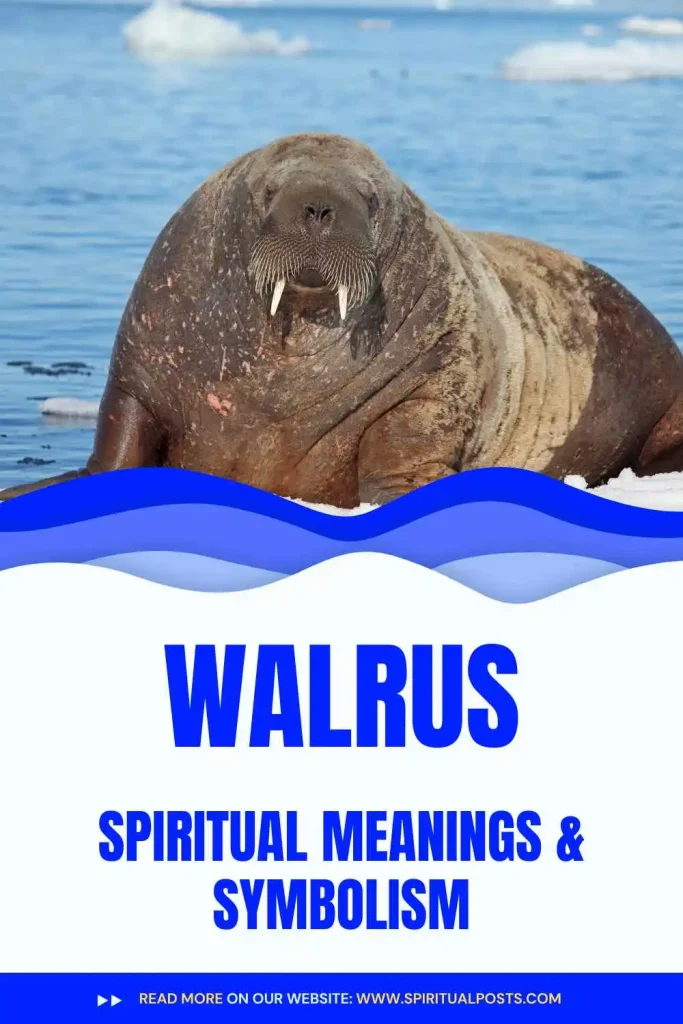
The walrus is an Arctic giant. Adult males can weigh over two tons and grow tusks that reach three feet long. These tusks are actually elongated canine teeth. Both males and females have them. Walruses use their tusks to haul themselves onto ice floes, to fight rivals, and to create breathing holes in thick ice. They are clumsy on land but graceful in water.
Walruses live in large herds. They lie packed together on ice or beaches, sometimes thousands of individuals in a single pile. They are noisy animals. They bellow, grunt, and produce bell-like sounds underwater. Their whiskers, called vibrissae, are incredibly sensitive. A walrus can detect a clam on the dark ocean floor by touch alone. Spiritually, the walrus represents community, sensitivity, and the ability to move between two worlds.
The walrus also has a thick layer of blubber that protects it from freezing water. This blubber is not just insulation. It is stored energy for lean times. Spiritually, this represents emotional and spiritual reserves. You need a layer of protection and stored resources to survive harsh conditions.
This article explores the spiritual meanings and symbolism of the walrus. You will learn what this Arctic giant represents and how its lessons of herd loyalty and deep sensitivity can guide you through your own cold seasons.
Key Takeaways
- The walrus symbolizes strength, resilience, and the power of the natural world, representing inner fortitude and the ability to overcome challenges.
- Walrus symbolism reflects the importance of community, cooperation, and support within one’s tribe, embodying the interconnectedness of all life.
- The walrus encourages introspection and a deeper connection with the subconscious, allowing access to inner wisdom and primal, intuitive aspects.
- Walrus symbolism emphasizes adaptability and the capacity to evolve in response to shifting circumstances, highlighting the resilience to find balance and stability amid adversity.
Introduction to Walrus
The walrus is a large, tusked marine mammal found in the Arctic regions, renowned for its impressive size and distinctive appearance. These massive creatures can weigh up to 3,700 pounds and measure over 12 feet in length, with their most notable features being their long ivory tusks and whiskered snouts.
Walruses are highly social animals, often gathering in large groups known as ‘haul-outs’ on the Arctic ice or coastal areas.
These fascinating creatures are adapted to thrive in the frigid Arctic environment, with a thick layer of blubber that insulates them from the cold. They use their powerful tusks for a variety of purposes, including fighting, establishing dominance, and hauling themselves out of the water.
Walruses are also known for their unique vocalizations, which can include bellowing, grunting, and even trumpeting sounds.
As apex predators in the Arctic ecosystem, walruses play a crucial role in maintaining the delicate balance of the region’s marine life. Their presence holds significant cultural and spiritual importance for many indigenous Arctic communities.
What Does It Mean When You See a Walrus ?
Seeing a walrus can hold deep spiritual significance, symbolizing strength, resilience, and the power of the natural world. As one of the largest and most impressive pinnipeds, the walrus commands respect and awe. Its massive size, thick hide, and impressive tusks evoke a sense of invincibility, reminding us of the raw power that exists in nature.
When you encounter a walrus, whether in the wild or in a dream, it can represent your own inner fortitude and ability to overcome challenges. The walrus’ resilience in the face of harsh Arctic conditions is a testament to the adaptability and determination that we all possess.
Its connection to the sea and the tides can symbolize the ebb and flow of your own life, the need to go with the rhythms of the natural world. Furthermore, the walrus’ social nature and strong familial bonds can signify the importance of community and support in your spiritual journey.
Embrace the walrus’ teachings and let its energy inspire you to face life’s obstacles with courage and conviction.
Walrus Symbolism
Walrus symbolism encompasses a diverse range of spiritual meanings, from strength and resilience to adaptability and community. These massive marine mammals are revered for their impressive size, impressive tusks, and their ability to thrive in the harsh Arctic environment.
The walrus is often seen as a symbol of endurance, as these creatures have the capacity to survive the frigid temperatures and unpredictable weather of their northern habitat.
The walrus is associated with a strong sense of community and family. Walruses are highly social animals, living and traveling in large herds, and fiercely protecting their young. This quality is often viewed as a lesson in the importance of cooperation and support within one’s own tribe or community.
The walrus’s adaptability is another key aspect of its symbolic meaning, as these animals are able to adjust to changing environmental conditions and overcome obstacles with resilience and determination.
Spiritual Meanings of Walrus
As you explore the spiritual meanings of the walrus, you’ll discover how this remarkable creature can connect you to the depths of your inner world.
The walrus’s strength in community and adaptability to change can inspire you to find your own protective instincts and cultivate patience and persistence in your journey.
Dive into the rich symbolism of the walrus to uncover the profound lessons it has to offer.
1. Connect to the Depths
Frequently, the walrus beckons you to connect with the depths, inviting introspection and a profound understanding of the subconscious. As this majestic creature dwells in the ocean’s vast expanse, it symbolizes the mysteries and hidden realms that lie beneath the surface of our conscious existence.
Through the walrus’s spiritual symbolism, you’re encouraged to dive deep within yourself, to explore the uncharted territories of your psyche. This powerful marine mammal reminds you to venture beyond the familiar and embrace the unknown, for it’s in the depths that true transformation and self-discovery can occur.
The walrus’s thick, protective skin represents the layers of your own emotional and psychological defenses. By learning to navigate these depths with courage and compassion, you can shed unnecessary barriers and connect with the primal, intuitive aspects of your being.
This journey inward allows you to access your inner wisdom, unlocking a deeper understanding of your place in the grand tapestry of life.
2. Strength in Community
Another profound aspect of the walrus’s spiritual symbolism is its representation of the strength found in community. You’re encouraged to embrace the interconnectedness of all life, recognizing that true growth and fulfillment often arise from fostering meaningful connections with others.
The walrus is a highly social creature, living and thriving in large colonies where they support one another and work together to ensure the survival and wellbeing of the group. This collective spirit reflects the idea that we’re all part of a greater whole, and that by joining forces, we can overcome challenges and achieve more than we ever could alone.
The walrus’s example reminds us to cultivate a sense of belonging, to nurture our relationships, and to leverage the power of community. When we do so, we tap into a wellspring of strength, resilience, and mutual understanding that can buoy us through even the most difficult times. By embodying the walrus’s communal nature, we honor the sacred truth that we’re all in this together.
3. Adaptability to Change
The walrus’s remarkable adaptability to change is another profound aspect of its spiritual symbolism. You’re encouraged to observe how this resilient creature navigates the ebbs and flows of its dynamic environment, readily adjusting its behaviors and strategies to thrive in the face of shifting conditions.
Its ability to adapt serves as a powerful reminder of the importance of flexibility, resourcefulness, and a willingness to evolve in response to the ever-changing circumstances of life.
Walruses are remarkably adaptable animals, able to adjust their foraging patterns, social behaviors, and even their physical attributes to accommodate changes in their habitat and environmental conditions.
For example, they can alter their diving depths and hunting techniques to access food sources that may become scarce or relocate due to shifts in ocean currents and ice floe patterns. Additionally, walruses have the capacity to modify their herd structures and communication methods to maintain cohesion and social stability amidst the dynamic nature of their ecosystem.
This innate adaptability is a testament to the walrus’s resilience and its ability to find balance and thrive in the face of adversity.
4. Protective Instincts
Walruses’ innate protective instincts are a profound aspect of their spiritual symbolism, embodying a fierce determination to safeguard their families and communities. These massive marine mammals are known for their unwavering loyalty and willingness to defend their loved ones against any perceived threat.
Whether it’s a mother walrus shielding her calf from predators or a herd banding together to fend off an intruder, their protective behaviors reflect a deep-seated desire to ensure the well-being and survival of their kind.
This strong sense of community and familial responsibility is highly revered in many spiritual traditions, as it symbolizes the importance of collective support and mutual care. The walrus’s protective nature encourages us to cultivate similar qualities within our own lives, fostering a heightened awareness of our interdependence and the need to safeguard those we hold dear.
5. Patience and Persistence
Walrus’s unwavering patience and persistence reflect a profound spiritual wisdom, encouraging you to approach life’s challenges with a similar steadfast determination.
These marine mammals are known for their ability to patiently wait for opportunities, whether it’s for the perfect moment to catch prey or to find a suitable resting spot. Their persistence in the face of adversity is truly admirable, as they’ll continue to try again and again until they succeed.
This spiritual lesson of patience and persistence can be applied to your own life. When faced with obstacles, resist the urge to give up quickly. Instead, channel the walrus’s resilience and steadfastly work towards your goals, even in the face of setbacks. Remain focused and don’t lose sight of what you’re trying to achieve.
With time and effort, the patience and persistence you’ve cultivated will pay off, just as it does for the walrus. Embrace this powerful spiritual teaching and let it guide you on your journey.
6. Respect for Tradition
Another profound spiritual lesson the walrus imparts is the importance of respecting tradition. As these marine giants traverse the ever-changing Arctic landscape, they demonstrate an unwavering adherence to the customs and ways of their ancestors.
You’d do well to emulate this reverence for tradition in your own life, for it anchors you to a rich cultural heritage and time-tested wisdom.
The walrus has long been a central figure in the spiritual beliefs and practices of Arctic indigenous communities. Through their rituals and stories, these communities have preserved the deep-rooted traditions associated with the walrus, which they view as a sacred and powerful creature.
By honoring the walrus and its role in their way of life, these cultures maintain a connection to their ancestral past, ensuring that the wisdom and knowledge of their forebears are passed down to future generations.
7. Honoring Sacred Cycles
Embedded within the existence of the walrus is an innate understanding of the sacred cycles that govern the natural world, a wisdom you’d do well to heed. The walrus, with its stoic presence and unwavering connection to the rhythms of the earth, serves as a powerful reminder of the importance of honoring the cyclical nature of life.
As the tides ebb and flow, the walrus instinctively responds, adapting its behavior to the changing conditions. Its ability to synchronize its activities with the lunar and seasonal cycles speaks to a profound respect for the natural order.
In the same way, you’re encouraged to attune yourself to the ebbs and flows of your own life, recognizing the value in embracing the natural cadence of growth, rest, and renewal.
The walrus, with its resilience and adaptability, embodies the wisdom of honoring sacred cycles. By observing and learning from this majestic creature, you can deepen your own understanding of the interconnectedness of all things, and find greater harmony within the ebb and flow of your own existence.
Walrus Symbolism in Different Cultures and Contexts
When examining the spiritual meanings of the walrus, you’ll find that it has been revered in a variety of cultural contexts.
The walrus holds significant symbolism in Native American, Celtic, Nordic, African, and Eastern traditions, often representing strength, protection, and connection to the natural world.
Delving into these diverse cultural perspectives can provide a deeper understanding of the multifaceted spiritual significance of this remarkable marine mammal.
Native American Culture
Across many Native American tribes, the walrus carries profound symbolic significance, reflecting the creature’s vital role within the intricate tapestry of northern coastal ecosystems.
For the Inuit, Yupik, and other indigenous groups, the walrus is revered as a source of sustenance, providing everything from meat and oil to ivory for tools and artwork. Its thick skin and fat layers symbolize resilience and adaptability, traits crucial for survival in the harsh Arctic environment.
The walrus is also imbued with spiritual meaning, often associated with strength, protection, and even the afterlife. Shamans may invoke the walrus spirit during rituals, seeking guidance and blessings. Its distinctive features, like the large tusks and whiskers, are thought to possess talismanic properties, warding off evil and bringing good fortune.
Moreover, the walrus’s close-knit social structure mirrors the communal values cherished by many Native American cultures, reinforcing its status as a revered and respected animal.
Celtic Culture
While the walrus holds profound significance in Native American cultures, its symbolic meaning also resonates within the rich tapestry of Celtic tradition.
In the Celtic worldview, the walrus is revered as a powerful totem, representing strength, endurance, and the ability to navigate the treacherous waters of life.
Within Celtic mythology, the walrus is often associated with the sea god Manannán, a powerful deity who rules over the mysteries of the ocean. The walrus is seen as a guide, helping the faithful to navigate the uncertain currents of existence and to find their way in the face of adversity.
Its thick, leathery skin is believed to symbolize the resilience and determination needed to confront the challenges of the physical and spiritual realms.
Moreover, the walrus’s tusks are thought to represent the horns of the Celtic god Cernunnos, the lord of the wild. This association links the walrus to the divine balance between the earthly and the celestial, highlighting its role as a conduit between the material and the spiritual worlds.
Nordic Culture
Stepping beyond the Celtic realm, the walrus’s symbolic significance extends into the rich tapestry of Nordic culture, where it’s revered as a powerful totem embodying the rugged resilience and maritime prowess of the northern peoples.
In the sagas and myths of the Vikings, the walrus is often depicted as a guardian of the seas, its massive bulk and formidable tusks symbolizing the formidable strength and determination required to conquer the icy waters of the North.
Beyond its physical attributes, the walrus also holds deeper spiritual meaning for the Norsemen, representing the cycle of life and death. Its ability to dive into the depths and emerge unscathed is seen as a metaphor for the soul’s journey through the trials of earthly existence.
The walrus’s connection to the sea and its role as a provider of sustenance further solidify its status as a revered symbol of abundance, fertility, and the harmonious relationship between humans and the natural world in Nordic cosmology.
African Culture
The walrus’s symbolic significance in African culture may surprise you, as it transcends the icy realm of the Nordic peoples to find reverence among the diverse communities of the African continent. Across many regions, the walrus is revered for its strength, resilience, and connection to the sea – qualities that resonate deeply with coastal African populations.
In West Africa, the walrus is often associated with the Yoruba deity Olokun, the ruler of the ocean depths and a symbol of wealth, power, and fertility. Walrus ivory has been used in traditional Yoruba artworks and rituals, conveying the creature’s divine status.
Similarly, in parts of East Africa, the walrus is linked to water spirits and deities, representing the mysteries and bounties of the sea.
For some African groups, the walrus also serves as a totem animal, its image adorning ceremonial objects and garments. The walrus’s impressive size, tusks, and aquatic nature imbue it with a sense of grandeur and spiritual significance that transcends cultural boundaries, making it a revered figure in the diverse tapestry of African belief systems.
Eastern Culture
Beyond the shores of Africa, the walrus’s symbolic significance takes on a captivating dimension within the rich tapestry of Eastern cultures, where its distinctive attributes have long been revered and imbued with profound meaning.
In the ancient traditions of China, for instance, the walrus is often associated with longevity, wisdom, and strength. Its formidable appearance and resilience are seen as emblematic of the Eastern philosophical principles of balance and harmony.
Similarly, in Japanese folklore, the walrus is believed to possess the power to ward off evil spirits and bring good fortune to those who encounter it. The walrus’s unique physical traits, such as its thick, wrinkled skin and distinctive tusks, have also inspired creative and spiritual interpretations in the art and mythology of many Eastern cultures.
From intricate carvings to reverent depictions in sacred texts, the walrus’s enduring presence reflects its deep-rooted significance as a symbol of spiritual and cultural significance throughout the East.
Hindu Culture
Venturing eastward from the realms of Japan and China, you’ll discover the captivating symbolism of the walrus within the rich tapestry of Hindu culture. In this ancient and vibrant tradition, the walrus is revered as a powerful totem, representing the delicate balance between strength and wisdom.
Within the Hindu pantheon, the walrus is closely associated with the revered deity Ganesha, the remover of obstacles and patron of new beginnings. The walrus’s tusks are seen as a symbol of Ganesha’s mighty intellect, capable of piercing through the veil of ignorance and guiding devotees on their spiritual journeys.
Additionally, the walrus’s amphibious nature is viewed as a representation of the interconnectedness between the material and the divine, a reminder of the fluid nature of reality.
Across Hindu temples and sacred texts, the walrus is depicted in intricate carvings and illustrations, serving as a powerful talisman for devotees seeking guidance, protection, and the attainment of higher wisdom.
Arts and Literature
Across the realms of arts and literature, the walrus has long captivated the human imagination, transcending its physical form to embody profound symbolic meanings. These depictions often highlight the walrus’s strength, resilience, and connection to the natural world, qualities that have resonated with artists across cultures.
In the visual arts, the walrus has been depicted in a variety of media, from the intricate carvings of the Inuit peoples to the expressive paintings of modern artists.
Similarly, in literature, the walrus has appeared as a powerful and evocative symbol. From the whimsical verses of Lewis Carroll’s ‘The Walrus and the Carpenter’ to the haunting descriptions in Herman Melville’s ‘Moby-Dick,’ the walrus has been used to explore themes of power, greed, and the human condition.
Its unique appearance and intriguing behavior have captured the imaginations of writers, who’ve woven the walrus into narratives that delve into the complexities of the human experience.
Mythology
The walrus’s symbolic significance extends beyond the realms of arts and literature, permeating the mythologies and belief systems of diverse cultures around the world.
In Inuit and other Arctic cultures, the walrus is often revered as a powerful and sacred creature, representing strength, endurance, and the vital connection between humans and the natural world.
Its immense size, thick skin, and fearsome tusks are seen as symbols of protection and resilience, while its role as a provider of food, oil, and other resources cements its place as a central figure in many indigenous cosmologies.
Beyond the Arctic, the walrus has also featured prominently in the mythologies of various coastal communities, from the Pacific Northwest to the islands of Japan.
In these contexts, the walrus is often associated with themes of fertility, abundance, and the cyclical nature of life and death. Its ability to transition between land and sea also imbues it with a sense of liminality and the power to traverse different realms of existence.
Walrus Biblical Meanings
Though the walrus isn’t explicitly mentioned in the Bible, you can still find spiritual meanings and symbolism related to this unique marine mammal within its pages.
While the walrus may not have a direct biblical counterpart, its traits and behaviors can be linked to various biblical themes and principles.
For instance, the walrus’s gregarious nature and tendency to gather in large herds or ‘haul-outs‘ could be seen as a metaphor for the importance of community and fellowship among believers.
Additionally, the walrus’s resilience and ability to thrive in the harsh Arctic environment may symbolize the strength and perseverance that Christians are called to cultivate in their own spiritual journeys.
Furthermore, the walrus’s use of its tusks for protection and dominance could be interpreted as a reminder of the need for vigilance and the wise use of power.
While the connections may not be explicit, the walrus can serve as a thought-provoking symbol that encourages deeper reflection on biblical teachings and their practical applications in our lives.
Spiritual Meaning of Dream About Walrus
Dreaming about a walrus can hold profound spiritual significance, inviting you to explore deeper aspects of your inner world and your connection to the natural realm. The walrus, with its distinctive tusks and marine habitat, often symbolizes strength, resilience, and the delicate balance between land and sea.
In a dream, the walrus may represent your own tenacity and ability to adapt to changing circumstances. It could signify a need to tap into your primal instincts and embrace your more intuitive, instinctual side.
The walrus may also be a call to honor your physical and emotional needs, reminding you to find balance between the practical and the spiritual. Furthermore, the walrus’ connection to the sea may symbolize the subconscious, the realm of emotions, and the flow of your own intuitive wisdom.
Interpreting the specific context and actions of the walrus in your dream can provide valuable insights into your personal journey and the areas of your life that require more attention or integration.
Walrus Spirit Animal, Totem, and Power Animal
Beyond the realm of dreams, the walrus may reveal itself as a profound spirit animal, totem, or power animal, offering guidance and insights that transcend the physical world.
As a spirit animal, the walrus is often associated with qualities like strength, resilience, and adaptability. Its massive size and impressive tusks symbolize the power to overcome obstacles and navigate challenging environments. The walrus spirit animal may encourage you to embrace your own inner fortitude, reminding you to remain steadfast in the face of adversity.
As a totem, the walrus represents the importance of community, loyalty, and the nurturing of relationships. Its tendency to gather in large herds reflects the value of collaboration and collective support. The walrus totem may inspire you to build strong social connections, fostering a sense of belonging and mutual care within your own circles.
As a power animal, the walrus can bestow a deep connection to the natural world, urging you to honor the cycles of life and the rhythms of the sea. Its ability to thrive in harsh, icy environments may empower you to confront your own personal challenges with unwavering determination and resilience.
Final Words
As you’ve learned, the walrus holds profound spiritual significance across cultures. From representing strength and resilience to symbolizing the harmony between the material and divine realms, the walrus is a revered totem that invites us to explore the depths of our own subconscious and embrace the interconnectedness of all life.
Its enduring presence in spiritual traditions speaks to the timeless wisdom and adaptability that this magnificent creature embodies.
You Might Also Like
1) 7 Spiritual Meanings of Alligators in Dream (Attack or Not!)
2) Viper Spiritual Meanings and Symbolism
3) 9 Spiritual Meanings of Turtle & Symbolism (Crossing Path!)
4) 6 Spiritual Meanings of Starfish & Dream Symbolism
FAQs
1. What does the walrus teach about balancing sensitivity with a tough exterior?
The walrus is one of the best spiritual teachers for this exact balance. The animal has two seemingly opposite qualities. First, it is incredibly tough. The walrus has thick skin, dense blubber, and sharp tusks. It can fight off polar bears, the largest land predators on Earth. Second, it is incredibly sensitive. The walrus’s whiskers can detect a single clam buried in mud from several feet away. The animal uses this sensitivity to find food in complete darkness. Spiritually, the walrus teaches that toughness and sensitivity are not opposites. They are partners. You need the tough exterior to survive long enough to use your sensitivity. And you need the sensitivity to find what nourishes you in dark places. Many people make a mistake. They think they have to choose between being hard or soft. The walrus says no. Develop your tusks. Develop your whiskers. Use them both. When you are in a threatening environment, rely on your tough exterior. Do not apologize for being hard to hurt. When you are in a dark environment where you need to find subtle nourishment, rely on your sensitivity. Let your whiskers feel for what is hidden. A balanced person switches between these modes as needed. The walrus switches instantly. You can learn to do the same.
2. I saw a walrus alone in a dream. But walruses live in large herds. What does solitary walrus symbolism mean?
A solitary walrus is unusual in nature but deeply significant in dreams. Walruses are herd animals by necessity. The Arctic is dangerous. A lone walrus is more vulnerable to polar bears and orcas. So when a walrus appears alone in your dream, it represents a voluntary or involuntary separation from your community. Ask yourself which one it is. If the solitary walrus seems calm and purposeful, you have chosen to leave your herd. This may be necessary for your spiritual growth. Herds provide safety but also conformity. You may have outgrown your community’s beliefs or practices. The solitary walrus says it is safe to leave. You have enough blubber and tusks to survive alone for a while. If the solitary walrus seems frightened or lost, you have been separated against your will. This dream often appears after a breakup, a move, a job loss, or a death. You did not choose to be alone. The dream is validating your fear. But notice that the walrus is still alive. It is still capable. Separation has not destroyed it. The dream asks you to focus on survival skills rather than on your loneliness. Find a breathing hole. Find food. Your herd may return, or you may find a new herd. But first, survive this alone season. If the solitary walrus has very long tusks, the dream emphasizes personal power. Even alone, you are well-armed. You are not as vulnerable as you feel.
3. How does walrus spiritual meaning compare to seal or sea lion symbolism?
Walrus, seal, and sea lion are all pinnipeds, but their spiritual meanings differ significantly. The seal is the most aquatic of the three. Seals are awkward on land but graceful in water. Seal spiritual meaning emphasizes deep emotions, the subconscious, and the ability to dive into dark places. A seal can hold its breath for a long time. Spiritually, this represents endurance in emotional depths. The sea lion is the most social and playful. Sea lions gather on beaches in noisy, active colonies. They bark, play, and show off. Sea lion spiritual meaning emphasizes joy, performance, and visible community. The walrus sits between these two. Like the seal, the walrus dives deep and uses sensitivity in darkness. But unlike the seal, the walrus is heavily armed. It has tusks. Like the sea lion, the walrus is social and loud. But unlike the sea lion, the walrus is not playful. It is serious. Spiritually, the walrus represents armed sensitivity and serious community. You are not just diving deep. You are diving deep with weapons. You are not just part of a group. You are part of a group that fights together. If your spiritual path requires both deep feeling and strong protection, the walrus is your guide. The seal is for those who need to feel deeply without fighting. The sea lion is for those who need to express joy without depth. The walrus is for those who need both depth and defense.