Clownfish Spiritual Meaning & Symbolism: Protection & Harmony

As you dive deeper into the captivating world of clownfish, you’ll uncover a tapestry of profound spiritual symbolism. These vibrant underwater creatures embody qualities like resilience, self-acceptance, and harmonious relationships – lessons that resonate across cultures and belief systems. Clownfish invite us to embrace our unique individuality, adapt to life’s challenges, and cultivate a sense of community. Their very presence serves as a reminder to approach the ebbs and flows of existence with playful courage. Intrigued to explore the multifaceted spiritual significance of these marine marvels? Let’s dive in and unlock the deeper meaning behind their captivating charm.
Key Takeaways
- Clownfish symbolize vibrant individuality, with their unique patterns and hues reflecting the beauty of self-expression and celebrating differences.
- The clownfish’s adaptability and playful resilience in navigating challenges inspire flexibility, optimism, and the capacity for growth in the face of adversity.
- Clownfish’s symbiotic relationships with sea anemones represent the importance of balance, cooperation, and finding harmony within shared environments.
- Clownfish’s chameleon-like ability to blend into their surroundings symbolizes the value of open-mindedness, responsiveness, and cultivating an adaptable perspective.
Introduction to Clownfish
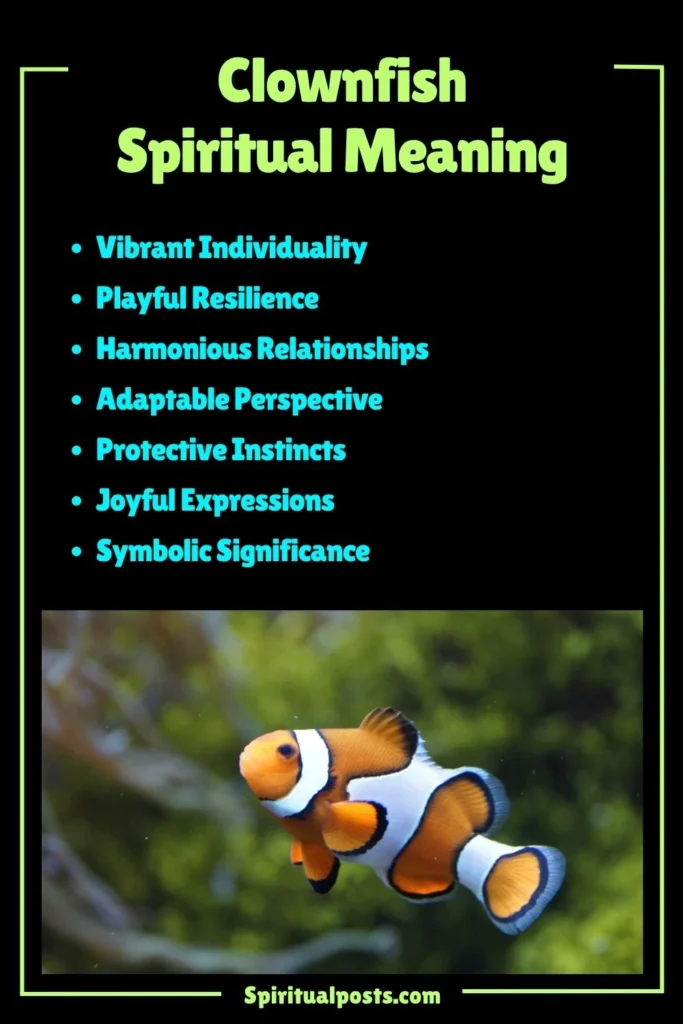
Clownfish, also known as anemonefish, are small, vibrant marine fish found in the shallow, warm waters of the Indo-Pacific region. These fascinating creatures are instantly recognizable by their bright orange or reddish-orange bodies, accented with distinctive white stripes.
Belonging to the Pomacentridae family, clownfish are closely associated with sea anemones, in which they make their homes, living in a mutually beneficial relationship.
Clownfish are typically small, ranging from 3 to 7 inches in length, with a laterally compressed, disc-shaped body. They’ve a unique ability to adapt to the stinging tentacles of the anemone, allowing them to take shelter and find protection from predators.
In return, the clownfish help to maintain the anemone’s health by removing parasites and dead tissue, as well as providing nutrients through their waste. This symbiotic partnership is just one of the fascinating aspects of these charismatic marine creatures.
What Does It Mean When You See a Clownfish ?
Seeing a clownfish may evoke a sense of playfulness, wonder, and connection to the natural world. These vibrant, striped fish are often associated with positive spiritual meanings and symbolism.
When you encounter a clownfish, it can signify a need for more joy, creativity, and lightheartedness in your life. The clownfish’s playful nature reminds us not to take ourselves too seriously and to embrace our inner child.
The clownfish’s ability to thrive in the delicate coral reef ecosystem can symbolize adaptability, resilience, and the importance of finding harmony within one’s environment. Its close relationship with the sea anemone represents the value of forming supportive partnerships and embracing interdependence.
Witnessing a clownfish can inspire a deeper appreciation for the wonders of the underwater world and the interconnectedness of all living beings. Ultimately, the spiritual meaning of a clownfish sighting encourages you to cultivate a sense of playfulness, adaptability, and deep connection with the natural world around you.
Clownfish Symbolism
Beyond their captivating appearance, clownfish embody a rich tapestry of symbolic meanings that can resonate profoundly within one’s spiritual journey. These beloved marine creatures are often associated with themes of protection, family, and resilience, offering powerful insights for personal growth and introspection.
| Symbolic Meaning | Spiritual Significance | Practical Application |
|---|---|---|
| Protection | Clownfish thrive within the safe confines of sea anemones, symbolizing the importance of creating a supportive, nurturing environment for oneself and loved ones. | Cultivate a sense of inner sanctuary, surround yourself with positive influences, and recognize the value of interdependence. |
| Family | The close-knit nature of clownfish communities reflects the strength and unity that can be found in healthy familial and social relationships. | Prioritize the well-being of your support system, foster a sense of belonging, and embrace the transformative power of community. |
7 Spiritual Meanings of Clownfish
As you explore the spiritual meanings of clownfish, you’ll discover a rich tapestry of symbolism.
These vibrant and resilient creatures represent the power of individuality, the importance of harmonious relationships, and an adaptable perspective that helps us navigate life’s challenges.
Their protective instincts also serve as a reminder to nurture and defend the things we hold dear.
Vibrant Individuality
The vibrant clownfish exemplifies the beauty of individual expression, its distinct patterns and hues a testament to the richness of diverse perspectives. Just as no two clownfish are exactly alike, each person possesses a unique blend of traits and experiences that shape their identity. This vibrant individuality is a source of strength, allowing us to bring our authentic selves to the world.
Like the clownfish, which thrives in the dynamic ecosystem of the coral reef, we too can embrace our singular nature and find our place in the broader tapestry of life. Our differences aren’t weaknesses to be hidden, but gifts to be celebrated. When we’ve the courage to unapologetically express our individuality, we inspire others to do the same, fostering a more colorful and inclusive society.
The clownfish reminds us that our diversity isn’t a liability, but a wellspring of beauty, creativity, and resilience. By honoring our vibrant individuality, we can each make a distinct and valuable contribution to the world around us.
Playful Resilience
Amid the clownfish’s playful antics, you’ll discover a profound resilience that can inspire your own journey of spiritual growth. These vibrant little creatures dwell in the dynamic and often turbulent environment of coral reefs, yet they effortlessly navigate the challenges they face. This innate adaptability reflects a spiritual lesson – that growth and transformation can emerge even from the most chaotic circumstances.
The clownfish’s capacity to thrive in the face of adversity is a testament to its unwavering spirit. Its vibrant stripes and joyful movements symbolize the importance of maintaining a playful, lighthearted attitude, even when life presents obstacles. By embracing this spirit of resilience, you can learn to approach your own struggles with a sense of flexibility and optimism, allowing you to bounce back stronger than before.
As you observe the clownfish’s unwavering presence within its reef habitat, consider how you might cultivate a similar steadfastness in your own life. Let the clownfish’s example inspire you to meet life’s trials with a spirit of playful resilience, and to emerge from them with renewed vigor and spiritual growth.
Harmonious Relationships
But the clownfish’s harmonious relationships within its community offer another profound spiritual lesson. You can foster greater unity and connection in your own life by observing how these vibrant creatures coexist peacefully, even in the face of the reef’s inherent chaos.
Clownfish are known for their remarkable ability to form symbiotic relationships with sea anemones, living in harmony within these toxic environments. This reflects a core spiritual principle – the importance of finding balance and cooperation, even amidst the challenges and adversity of life.
Clownfish exhibit a deep respect for the boundaries and needs of their companions, never encroaching on each other’s personal space or disrupting the delicate equilibrium of their shared home. They work together instinctively, playing complementary roles that support the well-being of the entire community.
Adaptable Perspective
Clownfish’s chameleon-like adaptability underscores the spiritual value of cultivating an open-minded perspective, ready to thrive in life’s ever-changing currents. Like their ability to change colors to blend seamlessly into their environment, the clownfish’s spiritual lesson encourages us to be fluid, flexible, and responsive to the ebbs and flows of our existence.
| Adaptability | Resilience | Harmony |
|---|---|---|
| The clownfish’s remarkable capacity to adapt to diverse habitats and situations mirrors our own potential to navigate life’s challenges with grace and ease. | Clownfish’s resilience in the face of adversity, such as their ability to withstand changes in their environment, inspires us to develop the inner strength to bounce back from setbacks. | The clownfish’s harmonious relationship with its host anemone symbolizes the importance of finding balance and synergy in our own relationships and interactions with the world around us. |
Embracing the spiritual gifts of the clownfish, we can learn to approach life with an adaptable mindset, weathering the storms and celebrating the calms with equal ease and equanimity.
Protective Instincts
Within the clownfish’s protective instincts lies a profound spiritual lesson on courageous self-defense and unwavering loyalty. Your own willingness to stand up for your values and shield those you hold dear can cultivate a sense of safety, trust, and belonging – much like the clownfish’s steadfast defense of its anemone home.
Known for their vibrant colors and entertaining behaviors, clownfish exhibit a fierce protectiveness towards their underwater abode. They fiercely guard their territory, aggressively chasing away potential threats to their anemone.
This protective instinct extends to the clownfish’s young, as the parents fearlessly shield their eggs and fry from predators. The clownfish’s commitment to its family and home reflects a spiritual principle of safeguarding what’s most precious.
Joyful Expressions
Vibrant colors and entertaining behaviors aren’t just eye-catching – they reflect the clownfish’s joyful expressions, a spiritual reminder to embrace life’s simple delights. These charismatic creatures, with their playful antics and vibrant stripes, embody a zest for living that can inspire us to find happiness in the present moment.
| Spiritual Meaning | Behavioral Representation | Emotional Impact |
|---|---|---|
| Playfulness | Darting and weaving through coral | Lightens the spirit |
| Resilience | Returning to their anemone home after danger | Instills hope |
| Interconnection | Forming symbiotic relationships with anemones | Fosters unity |
The clownfish’s carefree movements and unwavering loyalty to their anemone partners symbolize the importance of embracing joy, adaptability, and the interconnectedness of all living things. By observing and reflecting on the clownfish’s spiritual qualities, we can cultivate a more lighthearted and resilient approach to life’s challenges, ultimately fostering a deeper sense of harmony and fulfillment.
Symbolic Significance
Beyond their captivating appearances, clownfish embody profound spiritual meanings that can enrich your own journey. Their unwavering commitment to their anemone partners symbolizes the power of loyalty and interconnectedness, inspiring you to cultivate meaningful relationships and recognize your place within the larger web of life.
The clownfish’s ability to thrive within the anemone’s stinging tentacles represents the courage to face and overcome life’s challenges. Its vibrant colors mirror the spectrum of human emotions, reminding you to embrace the full range of your feelings and experiences.
Moreover, the clownfish’s harmonious coexistence with its host symbolizes the importance of balance, adaptability, and finding your rightful place in the world.
Ultimately, the spiritual significance of the clownfish lies in its capacity to teach us about the value of community, resilience, and self-acceptance. By contemplating the unique qualities of this remarkable creature, you can deepen your understanding of the interconnected nature of all life and find inspiration for your own personal growth and transformation.
Clownfish Symbolism in Different Cultures and Contexts
As you explore the spiritual meanings of clownfish, you’ll discover that these vibrant underwater creatures hold symbolic significance across diverse cultures.
From the Native Americans’ reverence for their playful nature to the Celtic associations with protection, the clownfish’s symbolism transcends geographical boundaries.
Similarly, Nordic, African, and Eastern traditions offer unique perspectives on the deeper meanings this fish may represent.
Native American Culture
In Native American culture, the clownfish is often revered for its vibrant colors and playful nature, with many tribes attributing spiritual significance to this small but captivating creature. For some indigenous communities, the clownfish is seen as a symbol of joy, laughter, and the importance of embracing one’s unique qualities.
Its ability to thrive in the protective embrace of the anemone is often interpreted as a metaphor for the value of community and mutual support.
Moreover, the clownfish’s bold stripes and dynamic movements are sometimes associated with the concept of duality and the balance between opposites. In certain traditions, the clownfish is believed to embody the principles of harmony, adaptability, and the interconnectedness of all living things.
Celtic Culture
For the Celts, the clownfish’s vibrant hues and playful antics were often seen as symbols of joy, renewal, and the celebration of individual differences. The Celts believed that the clownfish’s unique patterns and ability to thrive in the often-chaotic environment of the coral reef were metaphors for the richness and resilience of Celtic culture.
| Celtic Clownfish Symbolism | ||
|---|---|---|
| Symbol | Meaning | Significance |
| Vibrant Colors | Joy, Celebration | Embracing Diversity |
| Playful Behavior | Renewal, Rebirth | Adaptability, Resilience |
| Coexistence with Anemones | Interconnection | Harmony, Community |
The Celts saw the clownfish’s symbiotic relationship with the sea anemone as a testament to the power of cooperation and the interconnectedness of all living things. This understanding fostered a deep respect for the natural world and a belief in the importance of maintaining balance and harmony within the Celtic community.
Nordic Culture
Unlike the Celts, the Nordic cultures tended to view the clownfish‘s vibrant hues and playful demeanor as symbols of mischief, resilience, and the unpredictable nature of the sea.
In the rugged, seafaring societies of the North, the clownfish’s ability to thrive in the harsh, dynamic environment of the coral reef was seen as a testament to the power and volatility of the ocean.
The clownfish’s striking pattern of bold stripes and bright colors was often interpreted as a reflection of the region’s dramatic weather and tumultuous seas.
The fish’s bold, almost defiant appearance was thought to embody the resilience and adaptability that were so crucial for survival in the Nordic world.
Additionally, the clownfish’s tendency to dart and dart playfully among the reefs was viewed as a representation of the unpredictable and untamed forces of the natural world.
African Culture
How did the vibrant and playful clownfish serve as a symbolic representation in African cultures? In contrast to the Nordic societies, many African communities viewed the clownfish’s distinct appearance and behavior as a reflection of the region’s own diverse natural landscapes and dynamic social tapestry.
Across the African continent, the clownfish’s bold stripes and comical movements were often seen as a symbol of unity and resilience within tight-knit tribal groups. Its ability to thrive in the demanding coral reef environment mirrored the perseverance of many African peoples who faced challenging living conditions. Additionally, the clownfish’s cooperative behavior and protection of its young were interpreted as virtues to be emulated, representing the importance of community, family, and nurturing the next generation.
Furthermore, the clownfish’s vibrant colors and playful demeanor were sometimes associated with the rich artistic traditions and joyful cultural celebrations found throughout Africa. Its symbolic meaning often varied between different regions and ethnic groups, yet the clownfish remained a captivating figure in the broader tapestry of African spirituality and folklore.
Eastern Culture
While the clownfish held deep spiritual significance across the African continent, its symbolic representation in Eastern cultures offers a distinct and equally captivating perspective.
In the Eastern philosophies, the clownfish is often seen as a symbol of balance, harmony, and adaptability. Its vibrant colors and playful nature are believed to represent the duality of life, the interplay between light and dark, and the constant cycle of transformation.
In Feng Shui, the clownfish is sometimes used as a decorative element, believed to bring good luck and prosperity to the home or workplace. The fish’s ability to thrive in the protective embrace of the anemone is seen as a metaphor for finding refuge and support within one’s community or spiritual practice.
Additionally, the clownfish’s resilience and ability to navigate the challenges of its environment are often interpreted as emblems of personal growth and inner strength.
Hindu Culture
In the Hindu tradition, the clownfish’s vibrant colors and playful nature are often seen as symbolic of the divine dance of Shiva, the god of transformation and destruction. The clownfish’s mesmerizing movements and ability to thrive in the chaotic coral reef environment are believed to mirror Shiva’s cosmic dance, which represents the constant cycle of creation, preservation, and dissolution that underlies the universe.
Furthermore, the clownfish’s close association with the anemone, its protective host, is interpreted as a metaphor for the relationship between the individual soul (the clownfish) and the divine (the anemone). Just as the clownfish relies on the anemone for shelter and sustenance, Hindus believe that the human soul is intrinsically connected to the divine, and that true fulfillment can only be found through this sacred union.
In Hindu art and mythology, the clownfish is often depicted alongside other symbols of Shiva, such as the serpent or the drum, further reinforcing its spiritual significance within the tradition.
Arts and Literature
Beyond the spiritual symbolism found in Hindu culture, the clownfish’s vibrant colors and captivating behavior have also inspired artists and writers across a range of cultural contexts. In contemporary art, the clownfish’s striking patterns and dynamic movements have been captured in paintings, sculptures, and digital media, often serving as a metaphor for themes of resilience, community, and the beauty of the natural world.
In literature, authors have long been fascinated by the clownfish’s unique relationship with its host anemone, using this symbiotic partnership as a narrative device to explore concepts of interdependence, adaptation, and the delicate balance of ecosystems. From children’s stories that celebrate the clownfish’s playful spirit to more complex allegorical works that delve into the clownfish’s role as a sentinel species, these literary depictions have helped to raise awareness and foster a deeper appreciation for the importance of marine life.
Mythology
Across diverse cultural traditions, the clownfish’s vibrant hues and captivating behaviors have long captivated the human imagination, inspiring symbolic interpretations that reveal its significance as a vital component of the underwater realm.
In ancient Japanese mythology, the clownfish is associated with the deity Ebisu, the patron of fishermen and good fortune, its bold stripes and playful movements seen as embodying the prosperity and abundance of the sea.
Similarly, in Pacific Islander cultures, clownfish are sometimes revered as physical manifestations of ancestral spirits, their protective presence within the anemone regarded as a symbol of familial harmony and community resilience.
Even in Western contexts, the clownfish’s loyalty to its host anemone has drawn parallels to the human experience, its steadfast companionship interpreted as a lesson in the power of interdependence and the importance of finding one’s own niche within the greater ecosystem.
Across these diverse cultural contexts, the clownfish emerges as a richly symbolic creature, its mythological significance underscoring the profound spiritual dimensions of the natural world.
Clownfish Biblical Meanings
The Bible doesn’t explicitly mention clownfish, but you can find several passages that may offer spiritual insights about their symbolic meanings. While clownfish aren’t directly referenced, their unique characteristics and behaviors can be interpreted through a biblical lens.
For instance, the clownfish’s vibrant colors and playful nature may represent joy, playfulness, and the beauty of God’s creation. Additionally, the clownfish’s close-knit relationship with its host anemone could symbolize the importance of community, interdependence, and mutual care within the body of Christ.
Furthermore, the clownfish’s ability to thrive in the challenging marine environment may parallel the call for Christians to persevere and remain steadfast in their faith, even amidst life’s storms. Just as the clownfish finds refuge and protection within the anemone, believers can find shelter and guidance in God’s love and promises.
While the Bible doesn’t directly mention clownfish, their unique characteristics can serve as powerful metaphors for spiritual truths and the Christian life.
Spiritual Meaning of Dream About Clownfish
While the biblical parallels of clownfish offer spiritual insights, their symbolism can also manifest in the realm of dreams. When you dream about clownfish, it may symbolize a need for creativity, playfulness, and adaptability in your spiritual life.
Clownfish are known for their vibrant colors, playful movements, and symbiotic relationship with anemones. In a dream, they may represent a call to approach your spiritual path with a sense of wonder and joy. The clownfish’s ability to thrive in the unpredictable environment of the coral reef suggests that your dream may be urging you to embrace flexibility and adaptability in your spiritual practice.
Furthermore, the clownfish’s role as a protector of the anemone could symbolize the importance of nurturing and safeguarding your spiritual connections. Your dream may be prompting you to cultivate a deeper sense of community, support, and mutual care within your spiritual life.
Clownfish Spirit Animal, Totem, and Power Animal
In addition to the spiritual insights revealed through dreams, the clownfish can also serve as a powerful spirit animal, totem, or power animal, guiding you on your journey of self-discovery and personal growth.
As a spirit animal, the clownfish exemplifies adaptability, resilience, and the ability to thrive in challenging environments. Its vibrant colors and playful nature can inspire you to embrace your own unique qualities and find joy in the midst of adversity.
As a totem, the clownfish may symbolize the importance of community, cooperation, and protection. It can remind you to seek support from your loved ones and to offer your own assistance to those in need. The clownfish’s habit of living in symbiotic relationships with sea anemones can also represent the value of mutually beneficial partnerships and the power of interdependence.
Lastly, as a power animal, the clownfish can bestow upon you the courage to face your fears, the creativity to find innovative solutions, and the determination to persevere in the face of obstacles. Its lessons of adaptability and resilience can empower you to navigate the ebbs and flows of life with grace and authenticity.
A Final Note
Clownfish are remarkable spiritual symbols, embodying the courage to confront adversity, the joy of living in the present, and the power of community and balance.
Their vibrant individuality, resilient adaptability, and harmonious relationships represent profound lessons on self-acceptance and interconnectedness.
Across cultures, clownfish are revered as icons of mischief, renewal, and the celebration of unique qualities, offering a rich framework for embracing the full spectrum of human experiences.


