Axolotl Spiritual Meanings and Symbolism
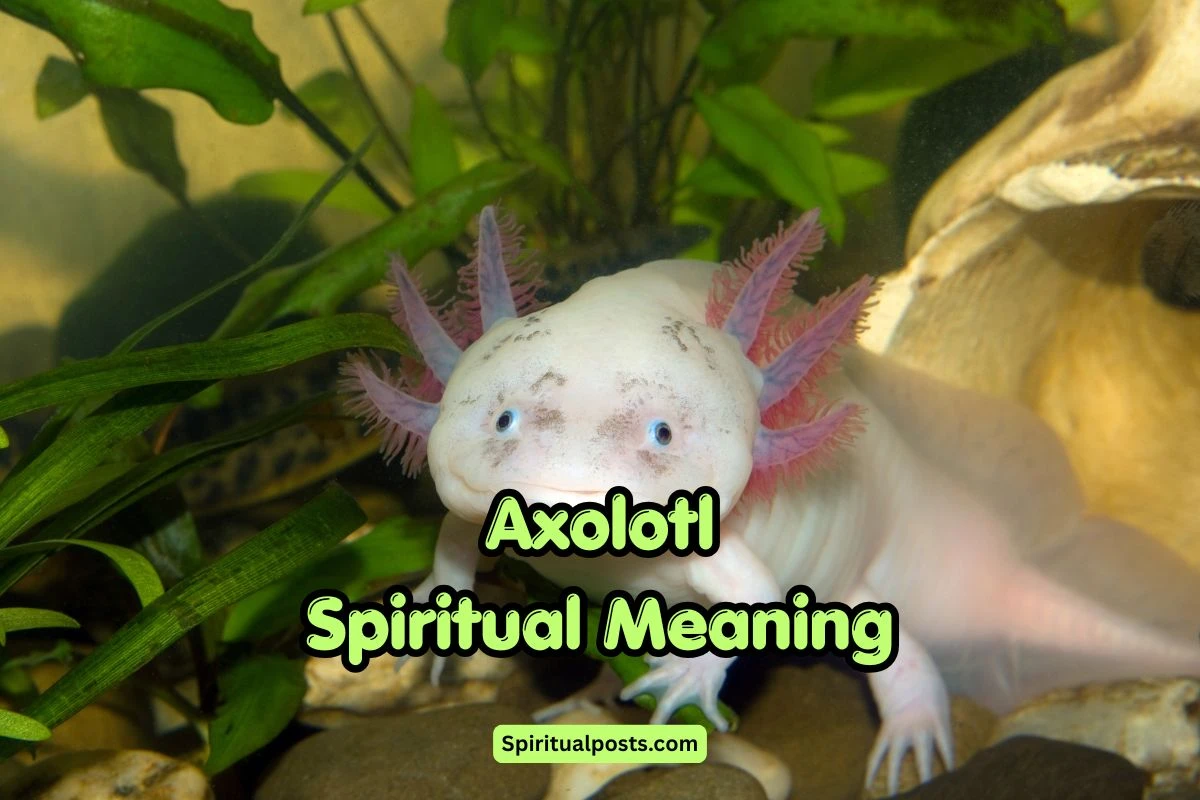
The axolotl is a rare kind of amphibian that stands out because of how different it looks and behaves. It comes from Lake Xochimilco in Mexico City, and it has some very special traits that most animals don’t have. One of the most amazing things about it is how it can regrow parts of its body like legs, tail, and even parts of its heart or brain.
Unlike other amphibians that change as they grow up, the axolotl stays in its young form forever. It keeps its soft, frilly gills and lives in water its whole life. That’s not something you see in most animals. This makes it very unique in the animal world.
Axolotls belong to the salamander family, and they are related to tiger salamanders. But they don’t look like your average salamander. They come in a lot of different colors, like pink, black, white, and gold. Their wide smile and peaceful look make them easy to recognize and hard to forget.
What makes them even more interesting is that they’ve become a major topic in science and research. Scientists are very curious about how they heal and grow back organs. Because of this, axolotls are helping people learn more about healing, medicine, and human health too.
Key Takeaways
- The axolotl represents themes of transformation, regeneration, and the capacity for personal growth and renewal.
- As an adaptive and resilient creature, the axolotl symbolizes the ability to navigate life’s challenges with flexibility and determination.
- The axolotl’s aquatic nature connects it to heightened spiritual consciousness, the integration of physical and spiritual realms, and a deeper reverence for the natural world.
- The axolotl’s remarkable regenerative powers spark interest in unconventional healing and the cultivation of heightened spiritual awareness and bodily rejuvenation.
Spiritual Meaning of Seeing an Axolotl
Seeing an axolotl isn’t just exciting because it’s rare—it can also feel spiritually meaningful. This little creature is seen as a symbol of change, growth, and healing. If one shows up in your life, it might be a sign that you’re going through something important, like a personal change.
The axolotl is a strong symbol of transformation. Since it can regrow its body parts, it reminds us that people, too, can grow through tough times. When you’re feeling stuck or hurt, the axolotl may be telling you that it’s possible to start fresh and move forward.
It also stands for regeneration, which means healing and beginning again. If life has been hard, seeing an axolotl could mean that you’re slowly finding your strength again. It may be a reminder that your spirit is strong, even if you’ve been through struggles.
Because axolotls live in water, they are deeply tied to the natural world. Their presence may ask you to look more closely at your own bond with nature. You might find comfort in things like trees, rivers, and animals as you go through your own changes.
What the Axolotl Symbolizes
The axolotl has meanings that go far beyond how it looks. Spiritually, this animal represents big ideas like life changes, healing, and emotional strength. It’s a creature that speaks to people going through personal journeys.
One big symbol is regeneration and resilience. The axolotl’s ability to grow back lost parts reminds us that we, too, can bounce back after hard times. It tells us that pain doesn’t have to be the end—there’s always a way to rebuild and heal.
It also stands for adaptability. Axolotls live fully in water, and they’ve learned to survive in their own environment. This teaches us that being flexible and adjusting to what’s around us can help us grow and stay strong when life changes.
Another powerful symbol is emotional depth. The quiet and calm nature of the axolotl shows us the value of slowing down and listening to how we feel inside. It’s about trusting your inner thoughts and learning from your emotions instead of hiding from them.
The axolotl reminds us that even the smallest or quietest beings can carry great wisdom. Their peaceful way of living and strong healing power can inspire anyone who’s facing change, pain, or deep emotional growth.
7 Spiritual Meanings of Axolotl
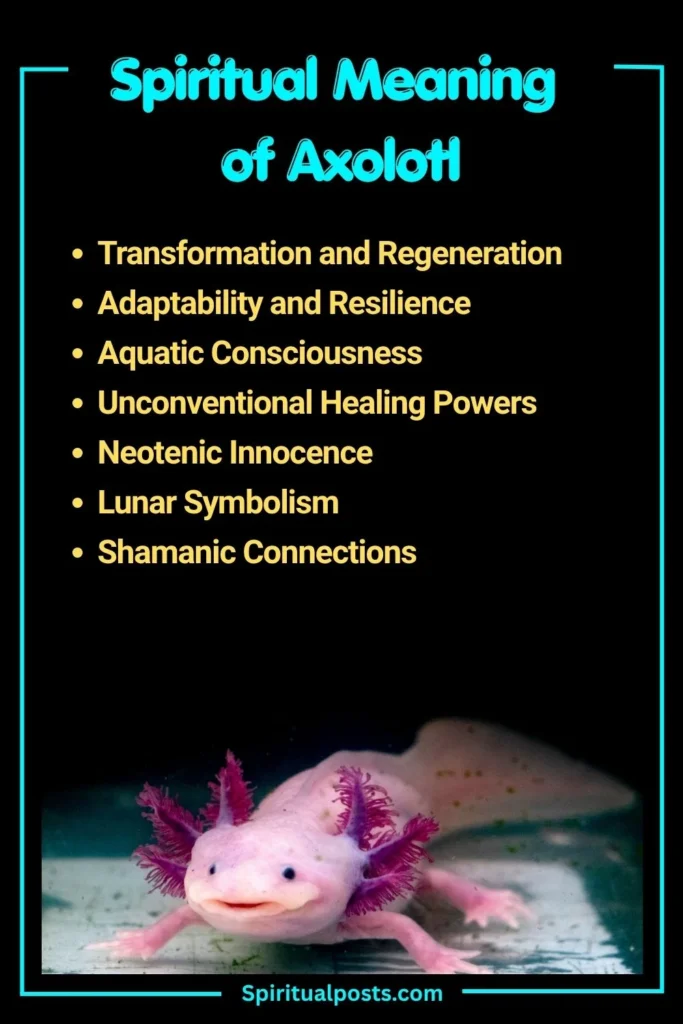
1. Transformation and Regeneration
The axolotl is famous for its power to regrow lost body parts, including limbs and even parts of its brain. This rare ability gives it a strong connection to the ideas of transformation and healing. Spiritually, people see this as a reminder that change is possible, even after pain or damage.
This tiny creature shows us that no matter what we lose in life—whether it’s hope, health, or direction—we can find ways to recover. Like the axolotl growing back a leg, we too can bounce back and become whole again.
Its unique way of rebuilding what’s broken teaches us something deeper. We are always growing and changing, even when things feel tough. Life may bring challenges, but we’re not stuck. We can learn, adjust, and rebuild from the inside out.
The axolotl’s gift also connects to the natural rhythm of life. Things end, and new things begin. Through every stage, we carry the power to renew ourselves and find a stronger version of who we are.
2. Adaptability and Resilience
Axolotls are not just healers—they’re survivors. Even when they face serious injury, they find a way to grow back what they need. This makes them symbols of adaptability and resilience. Spiritually, this tells us it’s okay to change when life demands it.
Rather than staying stuck, axolotls shift with their surroundings. That’s something people can learn from too. Life isn’t always easy, and when problems show up, we don’t need to fear them. We can face them, move with them, and even grow from them.
This adaptability reflects in our spiritual path as well. It’s a reminder that flexibility isn’t weakness—it’s strength. By adjusting to new situations, we don’t lose who we are. We become wiser, stronger, and more prepared for what’s next.
In a world full of surprises, being like the axolotl means trusting your inner strength. No matter how things change, you can keep going, keep healing, and keep growing.
3. Aquatic Consciousness
Axolotls live in water their whole lives, and that gives them a special link to the element of water. Water often stands for emotions, intuition, and the deeper parts of the mind. Because they live in these watery worlds, axolotls are seen as guides into our inner feelings.
Their gentle swimming and peaceful nature suggest a calm understanding of life. Spiritually, they invite us to listen to our feelings and be open to what’s happening inside. This isn’t always easy, but it’s where real growth begins.
The axolotl’s underwater world connects to the unseen. It’s a space where thoughts, dreams, and spiritual lessons flow quietly. By paying attention to these parts of ourselves, we can grow in ways that aren’t always visible—but are deeply meaningful.
They show us the value of slowing down and connecting with the quiet parts of life. In that stillness, we might find answers we’ve been missing.
4. Unconventional Healing Powers
Axolotls heal in ways most creatures can’t. They can rebuild major parts of their bodies, including their spinal cords. Spiritually, this incredible ability points to healing that goes beyond the ordinary, something deeper than medicine or science.
Because of this, some people believe that the axolotl holds a kind of hidden healing energy. They see it as a symbol for deep renewal, especially during times when normal ways of getting better aren’t enough.
In some spiritual practices, axolotls are included in visualizations or rituals to support the body’s own power to heal. Even though this isn’t about actual magic, it’s about tapping into the mind-body connection and believing in the strength within.
This little creature shows that healing can come in surprising ways. It doesn’t always follow the usual path—but that doesn’t make it less powerful.
5. Neotenic Innocence
One of the most striking things about the axolotl is that it keeps its youthful features for life. This is called neoteny, and it makes the axolotl look like a baby even when it’s fully grown. Spiritually, this points to innocence, purity, and a fresh view of the world.
Its soft features and wide eyes give it a childlike look that many people find peaceful. This symbolizes a gentle spirit, one that sees the world with kindness and curiosity.
Because they never “grow up” in the usual way, axolotls are also reminders to keep a sense of wonder and openness. In a busy world, it’s easy to get caught up in stress and forget how to enjoy small things. The axolotl helps us remember.
Its appearance isn’t just about being cute. It holds a deeper lesson about staying connected to the part of ourselves that is open, kind, and always ready to learn.
6. Lunar Symbolism
The axolotl’s soft, pale skin and glowing look give it a strong link to the moon. Like the moon, it moves quietly, lives in water, and appears magical. Many cultures have seen this connection and believe the axolotl is tied to lunar energy.
The moon stands for cycles, mystery, and change. It grows and fades, then grows again. The axolotl’s power to regenerate mirrors this pattern, making it a living symbol of the moon’s power to renew and guide.
Its nighttime habits also strengthen this link. It tends to move and eat when the world is dark, just like many other creatures of the night. This connection makes people feel that the axolotl holds secret wisdom.
By connecting with the axolotl, some believe they are tuning into the quiet, hidden strength of the moon, and the calm clarity that comes with it.
7. Shamanic Connections
In shamanic traditions, the axolotl is seen as a creature of great spiritual power. Its ability to regrow lost parts makes it a symbol of rebirth, which is a core idea in many healing practices around the world.
Shamans often look for signs in animals that can guide healing journeys. The axolotl, with its power to survive and thrive, becomes a strong helper in these rituals. It represents a deep ability to let go of old pain and grow something new.
Some believe that calling on the axolotl during meditation or healing work can help bring balance to both the body and spirit. It’s not about magic tricks—it’s about deep connection and trust in the natural process of healing.
Its link to both water and rebirth makes it a powerful guide for anyone working through hard times, helping them see that even in loss, something new can grow.
Axolotl Symbolism in Different Cultures and Contexts
The axolotl, a rare amphibian known for its ability to regenerate, has drawn the attention of cultures from all around the world. People see it as more than just an unusual creature. Its special qualities have led many groups to connect it with deep meanings.
This mysterious animal appears in stories, beliefs, and spiritual teachings. Across regions—from ancient tribes in the Americas to distant Eastern lands—it is linked to healing, change, and emotional depth. The axolotl’s connection to water adds another layer of mystery, often tying it to emotions and unseen energies.
Let’s explore how different cultures have understood the axolotl. Each view helps explain why this little water dweller is seen as a powerful symbol of transformation and spiritual strength.
Native American Culture
In Native American cultures, animals often carry messages, and the axolotl is no exception. It is known as a symbol of growth, healing, and spiritual strength.
Tribes view the axolotl as a totem that speaks to personal change. Its ability to grow back limbs shows how someone can heal, learn, and keep going even after hard times. This idea of bouncing back is deeply respected.
Since it lives in water, the axolotl is also tied to deep emotions and inner thoughts. Water often stands for feelings and the unseen world within us, and the axolotl swims right in the middle of that symbolism.
Because of all this, Native American traditions see the axolotl as a wise guide. It’s thought to help people connect with nature and strengthen their emotional and spiritual well-being.
Celtic Culture
In Celtic stories and beliefs, the axolotl becomes a symbol of rebirth and starting over. Its body knows how to repair itself, which speaks to the idea that people can grow stronger after being hurt.
Celtic people believed in the Otherworld—a place tied to water, dreams, and magic. The axolotl’s watery home links it to that mysterious world. It’s seen as a messenger that moves between the visible and the invisible.
The creature’s youthful look and crown-like gills also gave it a noble presence. Some Celtic shamans saw these traits as signs of spiritual insight and divine connection.
To the Celts, the axolotl wasn’t just an animal. It was a quiet reminder that life keeps moving, and we always have a chance to heal and change.
Nordic Culture
In Nordic lands, the axolotl takes on a different meaning. It still stands for change and new beginnings, but through the lens of life cycles and ancient Norse beliefs.
Norse myths often speak of death and rebirth. The axolotl, able to regrow parts of itself, fits right into this idea. It shows that even after something is lost, something new can rise in its place.
Water, in Norse stories, is often a bridge between two worlds. Since the axolotl lives in water, it’s seen as a symbol of the connection between the living and the spiritual.
Its strange and mystical look also made it popular in Nordic art. People used its image in decorations and clothing to honor nature and its hidden wisdom.
African Culture
Across Africa, the axolotl is viewed with a different kind of respect. Many traditions link it to healing, protection, and the strength to survive tough times.
Some African tribes saw the axolotl as a creature with spiritual powers. The Maasai, for example, thought it stood for long life and endurance. The Yoruba believed it could guide people through spiritual visions.
The Zulu people saw it as a guardian spirit, while the Akan admired its ability to adjust to change. These meanings show how closely people connected the axolotl to their own hopes and struggles.
Its ability to live in both water and on land made it a symbol of balance between worlds—between the physical and the spiritual. In African belief systems, such balance is key to a healthy life.
Eastern Culture
In the East, the axolotl is seen through the eyes of ancient wisdom. It becomes a symbol of life’s cycles, quiet strength, and inner peace.
In Japanese stories, it’s called the “water monster.” But this isn’t a bad thing—it means the axolotl is tied to long life and the ability to overcome hard times.
Traditional Chinese medicine looked at the axolotl’s body and saw a creature full of healing energy. They believed its powers could help the body recover and grow stronger.
In India, people connected the axolotl to the divine. Its shape and watery home reminded them of the deep links between all living things and the spiritual world.
Hindu Culture
In Hindu beliefs, the axolotl shines as a spiritual symbol. It’s tied to the idea that life never really ends—it keeps changing and growing.
The axolotl is linked to Moksha, the freedom from being born over and over again. Its ability to regrow parts of itself reflects the Hindu view that the universe is always renewing.
Its life in water and on land shows a perfect balance between body and spirit. Hindu art might even show it near gods, representing spiritual strength and the power to rise above pain.
This view of the axolotl encourages people to stay connected to both their physical world and their inner self. It’s a gentle reminder to look beyond the surface.
Arts and Literature
Writers and artists have been drawn to the axolotl’s mystery. Its strange shape and abilities have made it a perfect subject for deep, thoughtful works.
In books, the axolotl often stands for transformation and identity. Julio Cortázar’s famous story looks at what it means to change and stay the same. Other books use the axolotl to explore survival and the human spirit.
Painters and sculptors use its form to create art that feels dreamlike and thoughtful. The axolotl shows up in bright illustrations, deep symbolic pieces, and even jewelry.
Musicians have also found inspiration in its world. Its quiet life under water has led to songs and sounds that feel calm, deep, and full of mystery.
Mythology
In old myths, the axolotl was more than real—it was magical. People told stories about its powers and its strange way of living.
In Aztec legends, the axolotl was tied to the god Xolotl. This god helped people through death and change. The axolotl’s refusal to grow up fully was seen as a symbol of endless spiritual searching.
In modern Mexican stories, it’s seen as a trickster, able to help or confuse people. This playful role shows how the axolotl still lives in people’s minds.
Across Asia, it’s compared to legendary water beings. These links show how people across the world have seen the axolotl as more than just a creature—it’s a doorway to something bigger.
Axolotl Biblical Meanings
The Bible never talks about the axolotl by name. But some of its qualities match themes found in Scripture.
Its power to heal and grow new parts can remind people of spiritual renewal. The verse in 2 Corinthians says that anyone who finds faith becomes a “new creation.” That mirrors the axolotl’s way of becoming whole again.
Its life in water and on land can also point to the dual nature of life. John 3 speaks of being born of both water and Spirit, which reflects the axolotl’s unique way of living.
Even its comfort in dark places can feel like a symbol. Psalm 23 says we don’t need to fear the dark because we’re not alone. The axolotl, moving calmly through deep waters, reflects that quiet strength in dark times.
Spiritual Meaning of Dream About Axolotl
If you’ve dreamed of an axolotl, your mind might be showing you something important. These dreams often point to inner change, healing, and how you handle life.
Seeing the axolotl in a dream could mean that it’s time to let go of old habits and grow. If you dream it’s regrowing a limb, that may reflect your own strength and ability to recover from pain.
Talking or playing with an axolotl in a dream could mean you’re learning to adapt and stay flexible in daily life. And if you see it swimming, that might relate to your emotions or thoughts you haven’t noticed yet.
Dreams like these can be gentle nudges to take care of yourself, heal old wounds, and keep going—even if things feel uncertain.
Axolotl Spirit Animal, Totem, and Power Animal
If the axolotl shows up as your spirit guide, it brings a message of healing, emotional strength, and steady growth. It’s not loud or flashy, but it’s powerful.
As a spirit animal, the axolotl encourages you to stay connected to water. This means staying in touch with your feelings and inner world. It’s a reminder to trust your gut and give yourself space to grow.
As a totem, it helps you face change without fear. Life isn’t always smooth, but like the axolotl, you can adapt and thrive.
As a power animal, it teaches the strength of quiet resilience. You don’t have to rush. You don’t have to be perfect. You only need to keep moving, one step at a time.
Final Thoughts
The axolotl is more than a rare animal—it’s a powerful spiritual symbol. People see in it the strength to change, the gift of healing, and the wisdom of staying true to who you are.
Its link to water connects it with deep emotions and calm energy. Its youthfulness reflects purity and new beginnings. And its ability to keep growing teaches us to stay open to change.
Across cultures and beliefs, the axolotl reminds us to grow, heal, and keep going—even when things feel hard.
You Might Also Like
1)
2)
3)
4)
5)