Asp Spiritual Meanings and Symbolism
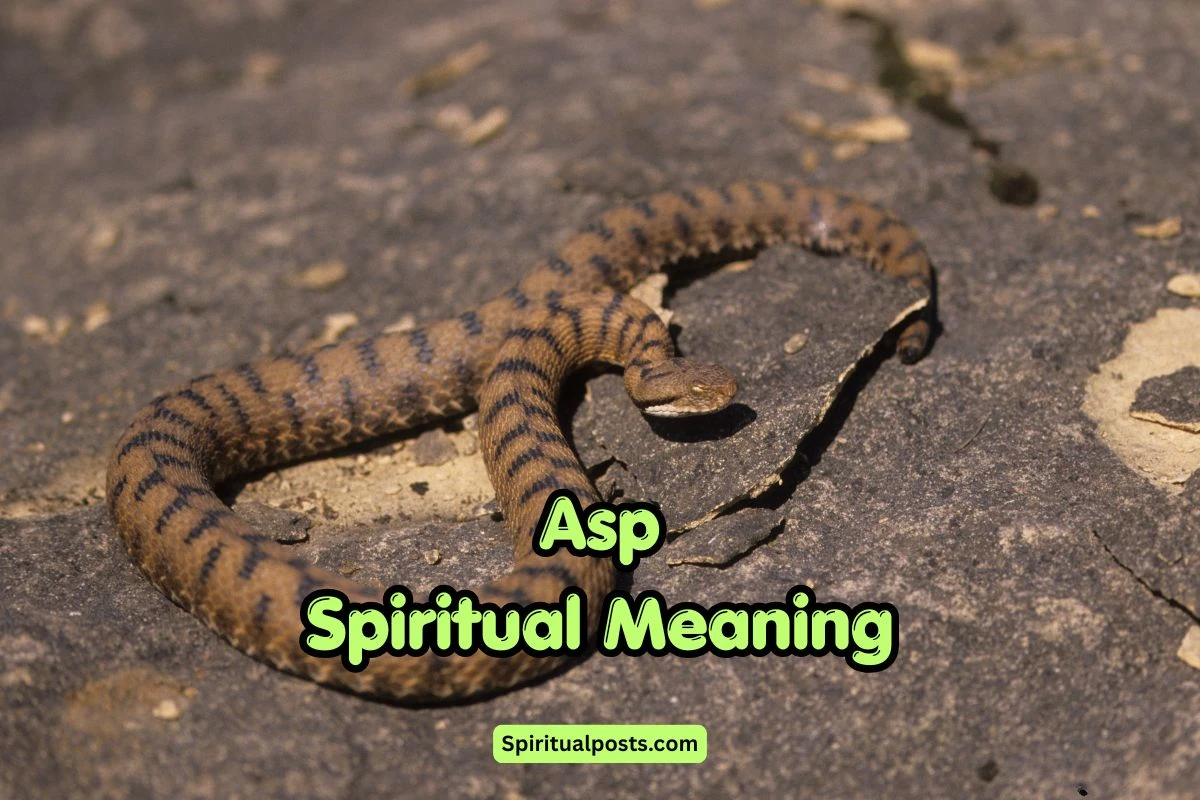
You might not expect it, but the asp, a venomous snake, carries deep spiritual meaning in many cultures. Its coiled posture and watchful eyes symbolize inner wisdom, while its habit of shedding skin represents personal growth. However, the asp’s dual nature—linked to both life and death—hints at even deeper meanings waiting to be discovered.
Key Takeaways
- The asp is a symbol of duality, representing life and death, renewal and destruction, and the complexities of existence.
- The asp’s ability to shed its skin is a metaphor for cycles of transformation, personal growth, and spiritual rebirth.
- The asp is revered for its keen senses and perceptiveness, making it a symbol of intuition, wisdom, and the awakening of higher consciousness.
- The asp is seen as a powerful protector and guardian, representing the inherent strength and resilience of the natural world.
Introduction to Asp
What exactly is an asp, and why does it matter in spirituality? The asp is a venomous snake found in Africa and the Middle East, known for its deadly bite and striking appearance. For centuries, it has held symbolic importance, especially in ancient Egypt.
In Egyptian mythology, the asp was tied to Wadjet, a goddess often shown as a cobra. It was seen as a protector of pharaohs, appearing on royal crowns and headdresses. The snake’s upright stance and intense gaze were signs of divine power and safety.
Beyond Egypt, the asp symbolized transformation and rebirth because of its ability to shed its skin. Some cultures even believed its venom had healing properties, adding to its mystical reputation.
What Does It Mean When You See an Asp?
Spotting an asp can be a powerful spiritual sign, often linked to change and duality. This snake represents both life and death, reminding us that growth often requires letting go. Its shed skin is a metaphor for starting anew, leaving behind old habits or fears.
If you see an asp, it might mean you need to face challenges or trust your instincts. In Egyptian tradition, the asp was connected to feminine energy and wisdom, suggesting a call to embrace your inner strength.
The true meaning depends on your own experiences. Reflecting on the encounter can offer guidance for your personal journey.
Asp Symbolism
The asp’s symbolism is rich and varied, touching on themes of power, wisdom, and renewal. Different cultures have seen it in unique ways, but some key meanings stand out.
| Symbolism | Meaning |
|---|---|
| Royalty | In Egypt, the asp symbolized divine rule, worn by pharaohs for protection. |
| Wisdom | Its skin-shedding represented gaining new knowledge and leaving the past behind. |
| Fertility | Linked to the Nile River, it stood for abundance and new beginnings. |
| Danger | Its venom reminded people that power has risks, balancing creation and destruction. |
The asp’s symbolism encourages us to think about life’s cycles—how endings lead to fresh starts, and how strength comes with responsibility. Its lessons are as relevant today as they were in ancient times.
7 Spiritual Meanings of Asp
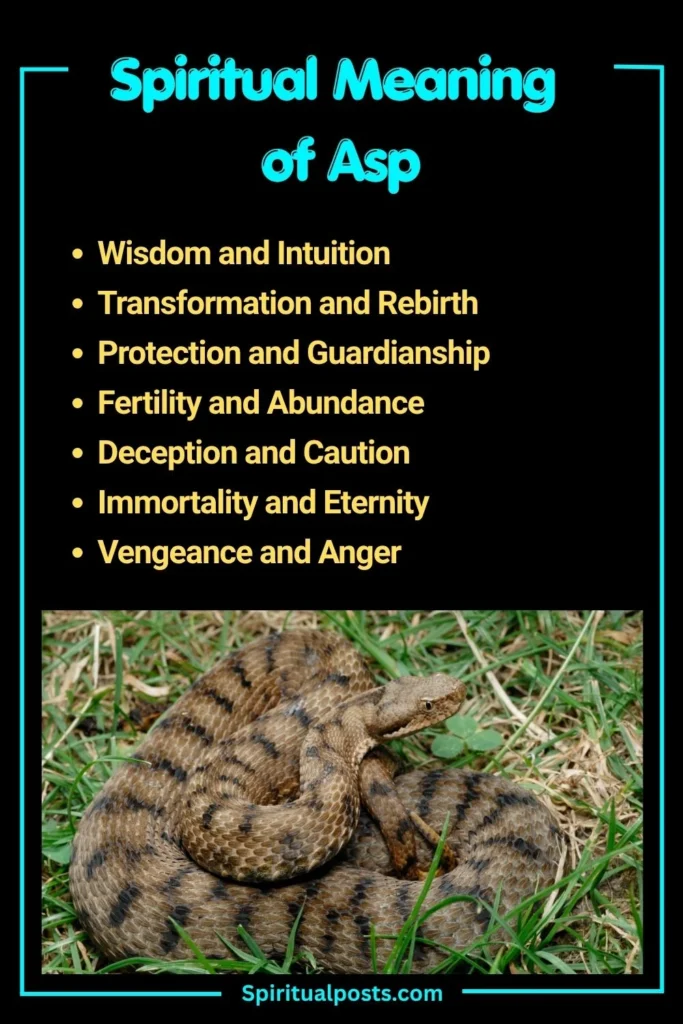
1. Wisdom and Intuition
The asp is often seen as a symbol of deep wisdom and strong intuition. Its coiled body and steady gaze are thought to reflect a kind of inner knowing. This isn’t about regular thinking—it’s about seeing beyond what’s on the surface, sensing things that others might miss.
In spiritual stories, the asp is respected for its quiet awareness. It doesn’t make a show of itself, but it always knows what’s going on around it. This makes it a guide for people learning to trust their instincts and inner voice.
Some traditions say the asp connects with something higher—a kind of spiritual truth. Its body, curled like a spiral, represents the path toward knowledge that comes from within, not from the outside world.
It also blends easily into its environment, which is seen as a sign of being calm and observant. People looking to grow spiritually often look to the asp for help with focus, mindfulness, and paying attention to the small, quiet clues around them.
2. Transformation and Rebirth
Another important spiritual meaning of the asp is transformation and starting fresh. When an asp sheds its skin, it’s not just about growing—it’s about letting go of what no longer fits. Spiritually, this can mean old beliefs, fears, or past mistakes.
This act of shedding skin reminds people that change is part of life. Even though change can be hard, it often leads to something better. Like the asp, we can step out of what holds us back and become something new.
The new skin underneath is smooth and clean, symbolizing renewal. It’s a way of showing that after a difficult phase, something more powerful and true can emerge.
By watching the asp, people are encouraged to release the past. It teaches that we don’t need to stay stuck in who we were—we can move toward who we’re meant to be.
3. Protection and Guardianship
The asp is also seen as a strong protector and spiritual guard. With its alert eyes and quick defense, it sends a clear message: don’t mess with what’s sacred. In many ancient cultures, it stood at the gates of temples, tombs, or important places to keep harm away.
In Egyptian stories, the asp is linked to the goddess Wadjet, who guarded the pharaohs and sacred lands. She often took the shape of a cobra, watching over people and punishing those who tried to bring evil.
The asp’s bite isn’t random—it’s precise and powerful. Spiritually, this means the ability to strike only when needed, defending what’s right without wasting energy.
Because of this, the asp is seen as a symbol of watchfulness and strength. People who feel unprotected might connect with this meaning to find courage and set firm boundaries in their lives.
4. Fertility and Abundance
The asp is not only fierce—it also represents fertility and the flow of life. In ancient times, people saw it as a symbol of nature’s power to create and grow. The curves of its body were thought to reflect the beauty and strength of the female form.
This link to fertility shows up in stories where the asp is connected to gods or goddesses of creation. It reminded people of planting seasons, birth, and the cycles that keep life moving.
The shedding of skin also fits here—it represents renewal and the endless circle of life. As the old falls away, new things can grow in its place.
The asp’s power, both gentle and fierce, shows that abundance doesn’t only come from peace. It also comes from strength, balance, and respecting the rhythms of nature.
5. Deception and Caution
Even with its good traits, the asp also carries a warning. Its ability to hide and strike without notice gives it a strong tie to deception and the need for caution. People are reminded that not everything is what it seems.
Its venom and quiet movements make the asp dangerous when ignored. Spiritually, this means we should stay alert. Sometimes, trusting blindly can lead to harm.
The asp blends into its surroundings so well that danger might go unnoticed. This is a lesson about being careful, even when things look safe. It teaches that awareness and careful thinking can protect you.
In some beliefs, the asp’s venom is even seen as a tool for trickery. This reminds people to think twice and not fall for sweet words or false promises. Staying sharp can keep you from making painful mistakes.
6. Immortality and Eternity
Beyond protection and warning, the asp also speaks of eternity and life without end. Because it sheds its skin again and again, people have linked it with the idea that life continues—even after death.
In Egypt, the asp represented the sun’s path across the sky, never-ending and always returning. This daily journey became a symbol of life that doesn’t stop, even if it changes form.
Its shape, coiled into a circle, points to time without a beginning or end. Spiritually, that means the soul moves through many phases, learning and growing along the way.
The asp’s venom was also believed to hold secret power. If used right, it was said to bring everlasting life. This gave the asp a magical status, standing between life and death, holding the key to the unknown.
7. Vengeance and Anger
Finally, the asp has been tied to vengeance and powerful emotions. Its venom isn’t only for protection—it can be used to punish. In old stories, it was seen as a tool of justice, striking down those who broke sacred laws.
The goddess Wadjet, often shown with an asp, used its deadly force to protect what was right. When someone crossed a line, the asp’s bite delivered swift punishment.
At the same time, the asp warns about the danger of too much anger. Its fast, harsh strike shows how destructive unchecked emotions can be. Rage without control often leads to regret.
By studying the asp’s meaning, people are reminded to keep their feelings in check. Strength is not about hurting others—it’s about knowing when to act and when to step back with calm.
Asp Symbolism in Different Cultures and Contexts
The asp holds a powerful place in many cultures, each offering a unique meaning to this snake. In Native American beliefs, it’s seen as sacred. In Celtic and Nordic traditions, it’s often tied to death and the underworld. Across Africa and the East, the asp plays a role in spiritual stories and myths.
Different societies see the asp in different ways. Some focus on its venom, while others are fascinated by how it sheds its skin. These traits connect the asp to ideas of life, death, healing, and transformation.
By looking at how the asp appears in various cultures, we learn more about how people make sense of nature and spiritual ideas. This small reptile becomes a big symbol when we dig into its deeper meanings.
Each viewpoint gives a new layer to the asp’s identity. Together, they show how one animal can mean so many things to different people across time and place.
Native American Culture
In Native American traditions, the asp is more than a snake. It’s a symbol of healing, a protector, and a reminder of life’s delicate balance. Many tribes admire how it sheds its skin, which points to renewal and the cycle of life.
The asp is seen as a guardian that keeps away evil spirits. Some believe it shields both individuals and the entire community from negative forces.
Its venom, though dangerous, is sometimes viewed as a source of medicine. Certain tribes have used it in remedies to treat illnesses, showing deep respect for the snake’s power.
Its coiled posture represents how everything in life is connected. This idea fits with the Native American view that all things in nature are linked.
The snake’s ability to strike fast and move quickly teaches lessons about staying sharp, being flexible, and acting with purpose when needed.
Celtic Culture
In Celtic beliefs, the asp is often linked to goddesses and healing powers. For example, the goddess Damona is shown with an asp, which highlights her role in renewal and fertility. Another goddess, Sulis, is tied to sacred springs and the snake as a link to the underworld.
The snake wasn’t only a spiritual symbol. In real life, its venom was believed to be helpful in medicine. Celtic druids might have used it in healing rituals, blending natural science with spiritual meaning.
The asp’s coiled shape shows up in Celtic art, often in spirals. These shapes reflect ideas about growth, time, and how all things are connected.
Through both myth and practice, the asp held a strong place in Celtic life. It symbolized change, healing, and the deep wisdom of nature.
Its presence reminded people that life moves in circles—not straight lines—and that change is always part of the journey.
Nordic Culture
In Nordic stories, the asp symbolizes the never-ending loop of life and death. It connects strongly to the mythical serpent Jörmungandr, who circles the world and is meant to fight the god Thor during Ragnarök.
Like in other cultures, the asp’s ability to shed its skin shows how life renews itself. Each time it changes, it represents a new beginning after an ending.
The coiled shape again speaks to the cycle of life. Everything is connected, and nothing truly ends—it transforms instead.
During the cold months, asps go quiet. This behavior was seen as nature’s way of resting before starting fresh again in spring. That hibernation carried deep meaning.
The bite of the asp, while dangerous, was also seen as part of the natural cycle. Destruction, in this view, wasn’t always bad—it was necessary for rebirth.
African Culture
In African beliefs, especially ancient Egyptian culture, the asp stood for divine power and rebirth. Linked to the sun god Ra, it symbolized the right to rule and the endless cycle of life.
Asps were also seen as protectors. In West African traditions, they guarded sacred places and helped connect the physical world to the spiritual one.
The snake’s coiled form showed up in rituals and art, reminding people of its sacred role in ceremonies. It wasn’t feared—it was respected.
Some used its venom in special cleansing rituals. They believed it could purify the spirit and push out harmful energy or influences.
Across the continent, the asp’s meaning stayed powerful. It was more than a snake—it was a symbol of wisdom, strength, and spiritual insight.
Eastern Culture
In places like India, China, and Mesopotamia, the asp holds deep spiritual meaning. It’s tied to ideas of protection, transformation, and the blend of body and spirit.
The coiled snake represents the circle of life, where nothing ends—it simply becomes something else. Shedding its skin means letting go of the old and stepping into the new.
In yogic traditions, the snake coiled at the base of the spine is called kundalini. When awakened, it brings spiritual energy and deeper awareness.
The asp also stands for:
- Royal power, shown in art and stories.
- Protection, guarding both people and sacred places.
- Fertility, linked to how life begins and grows.
- Wisdom, the kind that bridges the earthly with the unseen.
This wide range of meanings shows how much value Eastern cultures give to this small, yet powerful creature.
Hindu Culture
In Hindu stories, the asp is closely linked to gods and cosmic energy. It appears alongside deities like Shiva, Vishnu, and the serpent goddess Manasa.
The snake called Sheshnaag is seen as a protector of the universe. It holds great spiritual power and stands for balance and harmony.
In Hindu temples, snakes are shown coiled around gods, often at their feet. This shows both strength and respect, reminding believers of life’s deeper forces.
Its skin-shedding process means more than change—it points to rebirth and the natural cycle that never stops. The old must leave for the new to come in.
The asp’s many roles—protector, divine messenger, spiritual symbol—show how important it is in Hindu faith. It connects people to the universe and to their own inner growth.
Arts and Literature
Throughout time, the asp has appeared in stories, paintings, and myths. In ancient Egypt, it symbolized royalty and power, often shown with pharaohs.
The asp played a key role in the story of Cleopatra, where it became a symbol of defiance and control over one’s fate. Her death by asp marked an end shaped by choice, not surrender.
In Shakespeare’s plays, the asp is a symbol of ambition’s dangers and how power can destroy. Its venom stands for more than poison—it means deep emotional or moral damage.
In art, the coiled snake appears as a decoration, often showing mystery and danger. Sometimes, it also hints at hidden strength or secret knowledge.
Modern artists now use the asp to express female strength. This flips older meanings and turns the snake into a sign of empowerment and independence.
Mythology
Across world myths, the asp and its snake relatives are symbols of both destruction and renewal. They show up in powerful stories that explore deep human themes.
In Hindu myths, the naga (serpent) protects sacred places and represents life’s eternal cycle. It reminds people of death, but also new life.
In Japanese tales, a giant snake called Yamata-no-Orochi stands for the wild forces of nature. It brings chaos but also teaches balance.
The Bible tells of the snake in Eden, a symbol of temptation. Yet it also shows healing, like the bronze serpent Moses raised in the desert.
In Mesoamerican stories, feathered serpents like Quetzalcoatl are creator gods, blending sky and earth. They represent knowledge and renewal.
These stories show how the asp and similar snakes have always caught the human mind, making people think deeply about life’s biggest questions.
Asp Biblical Meanings
In the Bible, the asp is usually a warning sign. It stands for danger, deception, and the serious results of sin.
It’s used to describe hidden threats, like in Proverbs 23:32, where sin is said to sting like an asp. This reminds people to be careful with their choices.
In Psalms 58:4-5, the asp is said to have deaf ears. This reflects those who ignore God’s voice and turn away from truth.
Romans 3:13 connects the asp’s poison to the harsh results of evil, showing how bad actions can spread harm.
In Genesis 3:15, the snake is part of the battle between good and evil. It symbolizes the spiritual struggle that runs through human life.
Spiritual Meaning of Dream About Asp
Dreaming of an asp can reveal deep parts of your inner self. It might show something harmful you need to face, or a moment of change waiting to happen.
The asp in a dream could point to a toxic habit or relationship that’s holding you back. It may be a warning to take a closer look at your choices.
But it might also signal a new beginning. Like the snake shedding its skin, you might be letting go of old ways and stepping into something better.
Look at how the asp acts in your dream. Is it calm or attacking? Your feelings during the dream also offer clues to what it means.
This dream is personal. It reflects your unique journey and the emotional shifts you might be going through.
Asp Spirit Animal, Totem, and Power Animal
When the asp appears as a spirit animal, it often comes during times of change or challenge. It carries lessons about growth, strength, and facing hard truths.
You might connect with the asp when you’re being asked to let go of outdated habits. Its energy can help you through a major shift in your life.
If fear is holding you back, the asp can guide you to look at it honestly. It helps you uncover what’s hidden inside and shine light on your deeper self.
The asp also speaks to intuition. It reminds you to trust your inner voice and pay attention to the signals around you.
With the asp as your guide, you can learn to stand strong in who you are, move through change with wisdom, and stay balanced through life’s ups and downs.
Final Thoughts
The asp is more than a snake—it’s a symbol of deep meaning found across the world. Different cultures have looked at it with wonder, fear, and respect.
Its ability to heal, protect, transform, and even destroy shows its place in many spiritual paths. Whether in myths, dreams, or daily life, the asp tells powerful stories.
It reminds us that growth often comes through change, and that power doesn’t always look loud or strong—it can be quiet, hidden, and wise.
The asp continues to capture the imagination of people, standing as a sign of life’s deeper truths and mysteries.
You Might Also Like
1)
2)
3)
4)
5)


