Bison Spiritual Meaning and Symbolism: Strength, Gratitude, and Sacred Grounding

Across cultures, the bison commands profound spiritual significance, embodying timeless symbolism that resonates on a primal level. This majestic creature’s physical attributes – its muscular frame, thick hide, and unwavering gait – represent the power to overcome adversity and the grounding stability of the natural world. Its cyclical migrations and role in sustaining ecosystems signify abundance, renewal, and the interconnectedness of all life. Revered in ceremonial rituals and storytelling, the bison serves as a sacred conduit between the physical and the divine, inspiring emulation of its herd mentality, transformative journeys, and intuitive wisdom. Delve deeper to uncover the multifaceted spiritual meanings and symbolism that the bison holds.
Key Takeaways
- Bison symbolize strength, resilience, and grounding, reflecting the interconnectedness between the physical and spiritual realms.
- Bison’s role as a provider of sustenance and resources is deeply revered, representing abundance, prosperity, and the generosity of the natural world.
- Bison’s strong herd mentality embodies the power of community, collective support, and the importance of recognizing one’s unique contributions.
- Bison’s seasonal migrations and shedding of coats symbolize the cyclical nature of life, transformation, and the release of old energies to embrace new beginnings.
Introduction to Bison
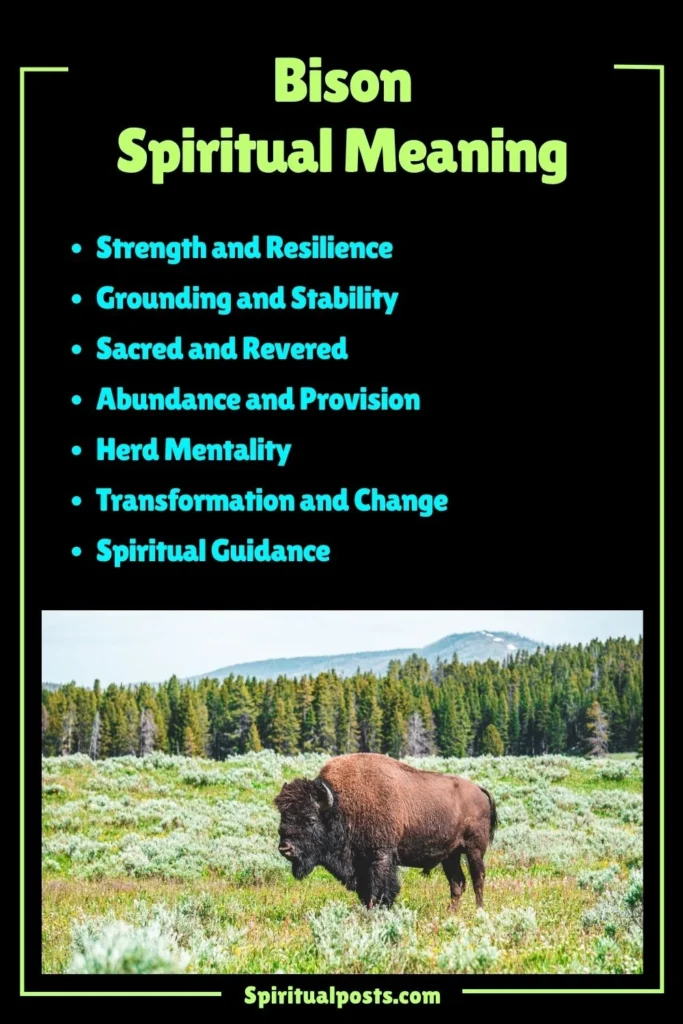
Bison, often referred to as American buffalo, are large bovine mammals native to North America. They typically weigh between 900 and 2,000 pounds and stand up to 6 feet tall at the shoulder. With their iconic humped shoulders, shaggy brown coats, and distinctive horns, bison are instantly recognizable as one of the most iconic symbols of the American West.
These majestic creatures once roamed the vast grasslands and prairies of the continent in vast herds, numbering in the millions. Sadly, their population was decimated by overhunting and habitat loss, nearly leading to their extinction by the late 19th century.
Thanks to conservation efforts, bison populations have since been restored, though they still occupy a fraction of their historic range.
Bison are remarkable animals, possessing great strength, resilience, and adaptability. Their significance extends far beyond their physical attributes, as they’ve long held deep spiritual and cultural importance for many Native American tribes.
What Does It Mean When You See a Bison ?
When you encounter a bison, it can be a powerful and meaningful experience, as these majestic creatures hold deep spiritual significance for many cultures. Bison are often seen as symbols of strength, endurance, and connection to the earth. Their presence can be a reminder to honor your roots, stand firm in your beliefs, and embrace the cyclical nature of life.
Seeing a bison can inspire a sense of awe and reverence, as these animals are a testament to the natural world’s resilience and the delicate balance of our ecosystems. Their appearance may also signify a call to deepen your spiritual practice, to connect with the rhythms of nature, and to find personal growth through embracing the wisdom of these ancient beasts.
Whether you encounter a bison in the wild or in a symbolic context, the experience can be a powerful opportunity to reflect on your own journey and to find inspiration in the timeless teachings of these magnificent creatures.
Bison Symbolism
The bison’s symbolism is deeply rooted in many Indigenous cultures, where it’s revered as a sacred and powerful totem.
Across the Great Plains and beyond, the bison has long been seen as a representation of:
- Strength, endurance, and resilience, as it overcomes harsh weather and terrain
- Abundance and generosity, as it provides food, clothing, and other resources for the people
- Connection to the land and the cycle of life, as it’s intimately tied to the natural world
The bison’s powerful presence, unshakable determination, and ability to sustain communities have made it a revered figure in many Indigenous belief systems.
Its symbolism reflects the deep respect and reverence these cultures hold for the natural world and its creatures. By understanding the bison’s spiritual significance, we can gain valuable insights into the worldviews and values of the peoples who’ve coexisted with this majestic animal for generations.
7 Spiritual Meanings of Bison
As you explore the spiritual meanings of the bison, you’ll uncover its deep connection to strength and resilience. The bison’s grounding and stable presence is revered in many cultures, symbolizing abundance and provision.
Its herd mentality further reinforces the bison’s sacred significance, offering insights into the power of community and collective support.
Strength and Resilience
Bison’s remarkable strength and resilience have long captivated the human spirit, inspiring us to embody their unwavering determination in the face of adversity. These majestic creatures possess an innate ability to thrive in harsh environments, their muscular frames and thick hides shielding them from the elements with ease.
Their powerful hooves can effortlessly traverse rugged terrain, leaving a trail of resilience in their wake.
Bison’s stamina is unparalleled, enabling them to endure long migrations and withstand the most challenging weather conditions.
When faced with danger, bison display an unwavering courage, forming protective herds that work together to safeguard their young and defend their territory.
The bison’s ability to adapt and overcome obstacles serves as a powerful metaphor for the human experience, reminding us to draw strength from the natural world and to persevere in the face of life’s challenges.
Grounding and Stability
Grounded in the earth, bison embody a sense of unwavering stability that can inspire your own rooted presence. Their massive frames, firmly planted on the ground, convey a steadfastness that transcends the ephemeral nature of life’s fluctuations. This sense of grounding and stability is reflected in the bison’s spiritual symbolism, offering a powerful reminder to stay centered and connected to the natural world.
| Grounding | Stability | Earthly Connection |
|---|---|---|
| Bison’s strong legs and hooves | Bison’s unwavering gait | Bison’s deep bond with the land |
| Bison’s ability to withstand harsh conditions | Bison’s resilience in the face of adversity | Bison’s role in sustaining prairie ecosystems |
| Bison’s slow, deliberate movements | Bison’s consistent rhythmic breathing | Bison’s harmonious integration with their environment |
Sacred and Revered
They’ve long been revered by Indigenous cultures across North America, whose spiritual beliefs often imbue the bison with sacred significance.
The bison is seen as a symbol of:
- Strength, power, and resilience, representing the endurance of the human spirit.
- Abundance and prosperity, as a provider of food, materials, and sustenance.
- Interconnectedness with the natural world, reflecting the deep spiritual connection between humans and the land.
For many tribes, the bison is considered a sacred being, worthy of reverence and respect. Its image is often incorporated into ceremonial rituals, artwork, and storytelling, serving as a conduit to the divine and a reminder of the holistic relationship between humanity and the natural world.
The bison’s symbolic importance continues to be honored and celebrated in Indigenous communities, preserving the rich cultural heritage and spiritual traditions associated with this iconic animal.
Abundance and Provision
For many Indigenous communities, the bison’s ability to provide sustenance, materials, and resources has imbued it with a deep spiritual significance as a symbol of abundance and provision. The bison’s sheer size and physical presence are seen as reflections of the immense generosity and nourishment it offers. Its meat, hide, bones, and other parts have traditionally been used to create a vast array of essential items, from clothing and shelter to tools and ceremonial objects. This multifaceted utility has led the bison to be regarded as a gift from the Creator, a provider that sustains both physical and spiritual needs.
The bison’s cyclical migrations and its role in replenishing the land further cement its place as a symbol of abundance and renewal. Its very existence is viewed as a testament to the land’s capacity to sustain life in times of plenty and scarcity alike. For many, the bison’s abundance represents the generosity of the natural world and the divine, a tangible manifestation of the spiritual principle of sufficiency.
Herd Mentality
The bison’s innate herd mentality embodies a profound spiritual lesson, inviting us to cultivate a deep sense of community and interdependence. As these majestic creatures roam the land, their collective unity serves as a powerful symbol of the strength that can be found in belonging to a group.
Bison instinctively gather in large herds, working together to find food, protect the young, and watch for predators. This collaborative approach ensures the survival of the entire group, rather than individuals acting alone.
Within the herd, each bison plays a vital role, whether it’s the lead bull guiding the group or the mothers safeguarding their calves. This intricate web of responsibilities reflects the importance of recognizing our own unique contributions to the whole.
The bison’s unwavering loyalty to their herd serves as a poignant reminder of the value of loyalty, trust, and mutual support within our own communities and relationships.
When faced with challenges, the bison’s herd mentality allows them to overcome obstacles through collective strength and resilience, a lesson we’d do well to emulate in our own lives.
Transformation and Change
Alongside their remarkable herd instincts, bison also embody a powerful spiritual message about transformation and change. As you observe these majestic creatures, you’ll notice how their resilience and adaptability enable them to navigate the ever-shifting landscapes of their existence.
| Bison Transformation | Description |
|---|---|
| Shedding | Bison shed their thick, woolly coats each spring, symbolizing the release of old energies and the embrace of new beginnings. |
| Migration | Their seasonal migrations across vast prairies mirror the cyclical nature of life, reminding us to move with the rhythms of our own personal journeys. |
| Survival | Bison’s ability to weather harsh conditions and thrive in the face of adversity inspires us to cultivate our inner strength and resilience. |
| Rebirth | The calves that emerge each year symbolize the continuous cycle of life, death, and renewal that is fundamental to the natural world. |
As you contemplate the bison’s transformative power, allow their teachings to guide you towards a deeper understanding of the ever-changing nature of your own life.
Spiritual Guidance
Bison’s spiritual guidance invites you to embrace the transformative power of change, inspiring you to shed outgrown beliefs and welcome new beginnings.
As you connect with the bison’s energy, you’ll find yourself drawn to:
- Reconnecting with the rhythms of nature and the cycles of life, honoring the ebb and flow of your own growth and evolution.
- Cultivating a sense of grounded stability, drawing strength and resilience from the bison’s steadfast presence.
- Tapping into your innate intuition and wisdom, allowing the bison’s keen senses to heighten your own perceptive abilities.
Bison Symbolism in Different Cultures and Contexts
Bison hold deep symbolic significance across various cultures and contexts.
From their revered status in Native American traditions to their representation of strength and resilience in Celtic and Nordic myths, the bison’s influence spans the globe.
Exploring these cultural associations can offer insights into the profound ways in which this majestic animal has shaped the beliefs and narratives of diverse civilizations.
Native American Culture
Revering the bison has long been a cornerstone of Native American cultures, with the majestic creature embodying profound spiritual and cultural significance. For many tribes, the bison represents a sacred connection to the land, the cycles of nature, and the very sustenance of life.
The bison’s role as a provider of food, clothing, and tools was paramount, and its hunting was seen as a sacred act, with rituals and ceremonies honoring the animal’s sacrifice.
The bison’s powerful presence and endurance were often interpreted as symbols of strength, resilience, and perseverance, qualities that were highly valued in traditional Native American societies.
The bison’s horns were frequently used in rituals and ceremonies, with their distinctive shape representing the duality of the physical and spiritual worlds.
The bison’s deep connection to the earth was celebrated, as the animal was seen as a conduit between the material and the divine, helping to maintain the delicate balance of the natural world.
Celtic Culture
Interestingly, the symbolic significance of the bison extended beyond Native American cultures, as evidenced by its prominent role in Celtic traditions as well.
For the ancient Celts, the bison was revered as a powerful and sacred animal, embodying themes of strength, fertility, and connection to the natural world.
In Celtic mythology, the bison was often associated with deities and mythical figures, such as the horned god Cernunnos, who was seen as a protector of the wild.
The bison’s impressive size, strength, and endurance were seen as symbolic of the resilience and fortitude needed to navigate the challenges of life.
Additionally, the bison’s role as a provider of food, clothing, and other essential resources was deeply respected in Celtic societies, further solidifying its place as a revered and spiritually significant creature.
The iconography of the bison was prominent in Celtic art and literature, appearing in various forms, from intricate carvings to ceremonial rituals.
This deep-rooted cultural association demonstrates the far-reaching influence of the bison’s symbolic meaning across diverse ancient civilizations.
Nordic Culture
In addition to the Celts, the bison also held great spiritual significance within Nordic cultures, where it was revered as a symbol of power, endurance, and connection to the rugged natural world. The Norse people, who inhabited regions of modern-day Scandinavia, saw the bison as a embodiment of the harsh yet awe-inspiring landscapes they called home.
In Norse mythology, the bison was often associated with the god Thor, the powerful deity of thunder, storms, and strength. The bison’s thunderous hooves were believed to mimic the rumbling of Thor’s chariot as he rode across the skies.
The bison’s resilience and ability to thrive in the face of adversity were also celebrated in Nordic folklore, where the animal was seen as a symbol of perseverance and the indomitable human spirit.
Bison horns were sometimes incorporated into ceremonial headdresses and other regalia, used to invoke the animal’s perceived qualities of leadership, protection, and spiritual guidance.
The bison’s deep connection to the natural world resonated with the Nordic people’s reverence for the land, and its image was often used in art, poetry, and other cultural expressions to celebrate the beauty and power of the northern wilderness.
African Culture
While the bison held deep spiritual significance within Nordic cultures, its symbolic importance extended far beyond the regions of Scandinavia, captivating the imaginations of peoples across the African continent as well.
In many African societies, the bison was revered as a powerful totem animal, its strength and resilience seen as embodiments of the divine.
For the Maasai people of East Africa, the bison represented fertility, prosperity, and the interconnectedness of all life. Its horns were believed to channel the energy of the earth, and bison dung was even used in ceremonial rituals.
Similarly, the Karo people of Ethiopia viewed the bison as a sacred messenger, interpreting its movements and behaviors as omens and signs from the spiritual realm.
Across the diverse cultures of Africa, the bison’s symbolism was equally multifaceted, serving as a conduit for ancestral wisdom, a symbol of communal unity, and a representation of the delicate balance between humans and the natural world.
Eastern Culture
Moving eastward, you’ll find the bison’s spiritual significance deeply embedded within the cultures and belief systems of Asia. Across this vast and diverse region, the bison’s symbolism has taken on a multitude of forms, reflecting the unique worldviews and traditions of its peoples.
In Eastern cultures, the bison is often associated with:
- Strength, power, and resilience – The bison’s imposing stature and tenacity are seen as embodiments of these vital qualities.
- Fertility and abundance – The bison’s connection to the land and its ability to thrive in harsh environments symbolize the prosperity and fecundity of nature.
- Guardianship and protection – The bison is revered as a protector, guarding the well-being of communities and the natural world.
These rich cultural associations underscore the profound significance of the bison in the spiritual tapestry of Eastern civilizations.
Hindu Culture
Across Hindu culture, you’ll find the bison’s symbolic significance deeply rooted in the sacred texts and rituals that shape the faith’s spiritual landscape. The mighty bison, known as the ‘Gaur’ in Hindu scriptures, is revered for its strength, virility, and connection to the divine.
In the Vedas, the ancient Hindu scriptures, the bison is often associated with Lord Shiva, the powerful and transformative deity. The bison’s horns are seen as a symbol of Shiva’s trident, representing the god’s ability to destroy ignorance and illusion.
Additionally, the bison is linked to the concept of ‘Dharma,’ the fundamental principles that guide righteous living in Hindu philosophy. Hindu temples and iconography frequently depict the bison as a protector and upholder of these sacred teachings.
Through rituals and folklore, the bison’s presence is woven into the fabric of Hindu spirituality, serving as a powerful totem of strength, resilience, and the cyclical nature of life.
Arts and Literature
Beyond the Hindu faith, the bison’s symbolic significance has permeated diverse artistic and literary traditions worldwide. From ancient cave paintings to contemporary poetry, the majestic bison has captivated the human imagination, serving as a potent metaphor for strength, resilience, and the awe-inspiring power of nature.
In ancient cave drawings, the bison’s powerful silhouette was often depicted alongside other wildlife, representing the interconnectedness of all living beings and the primacy of the natural world.
In the artwork of Native American tribes, the bison was revered as a sacred and totemic animal, its image woven into intricate tapestries, pottery, and ceremonial regalia.
In the poetry of the American West, the bison’s thunderous migration has inspired lyrical tributes to the enduring spirit of the American frontier.
Contemporary artists and writers continue to explore the bison’s symbolic potential, using its image to evoke themes of conservation, environmental stewardship, and the enduring power of the natural world.
Mythology
The bison’s symbolic potency transcends geographic and cultural boundaries, manifesting in the mythological traditions of diverse societies worldwide. In North America, many Native American tribes revered the bison as a sacred animal, imbuing it with profound spiritual significance. The bison was often seen as a provider, a symbol of abundance and fertility, as well as a representation of strength, endurance, and the cyclical nature of life.
Across the Atlantic, the bison’s mythos found expression in European folklore. In Celtic mythology, the bison was associated with the powerful sun god, Taranis, embodying the divine masculine principle. In Slavic traditions, the bison was linked to the god Veles, the protector of cattle and the underworld.
Even in ancient Mesopotamia, the bison was venerated as a symbol of kingship and cosmic order.
Regardless of cultural context, the bison’s mythological resonance speaks to its deep-rooted place in the collective human imagination, a testament to its profound and enduring significance.
Bison Biblical Meanings
Why do bison hold biblical significance? The bison, a majestic and powerful creature, appears in various passages throughout the Bible, often symbolizing strength, resilience, and the divinity of God’s creation.
In the Bible, bison are associated with:
- Strength and power: ‘He maketh my feet like hinds’ feet, and setteth me upon my high places.’ (Psalm 18:33)
These biblical references highlight the profound spiritual significance of the bison, reflecting the deep connection between this iconic animal and the divine.
Provision and sustenance: ‘And the flocks shall pass through the land of Judah; they’ll feed in Bashan and Gilead, as in the days of old.’ (Micah 7:14)
Awe and reverence for God’s creation: ‘Canst thou draw out leviathan with an hook? or his tongue with a cord which thou lettest down?’ (Job 41:1)
Spiritual Meaning of Dream About Bison
In your dreams, the presence of a bison may symbolize your own inner strength, resilience, and connection to the natural world. As a powerful and majestic creature, the bison represents the formidable aspects of your personality and the deep-rooted stability you possess.
Its appearance in your dreams could signify a need to tap into your innate resourcefulness and determination to overcome challenges.
The bison is also associated with the earth and the cycle of life, death, and rebirth. Dreaming of a bison may reflect your desire to reconnect with the rhythms of nature and find a sense of grounding and balance in your life.
Alternatively, the bison may symbolize your ability to navigate difficult terrain, both physically and metaphorically, with a steadfast and unwavering spirit.
Ultimately, the spiritual meaning of a bison in your dreams is deeply personal and may depend on the specific context and emotions surrounding the experience. Pay attention to your intuitions and feelings to gain a deeper understanding of the message the bison may be conveying.
Bison Spirit Animal, Totem, and Power Animal
As a bison spirit animal, it represents your unwavering strength, resilience, and connection to the natural world. The bison spirit guide is a powerful symbol, offering guidance and wisdom to help you navigate life’s challenges with determination and grace.
The bison’s grounded, steadfast nature encourages you to stand firm in your beliefs and values, even in the face of adversity.
As a totem, the bison embodies the importance of community, teaching you to find strength in unity and to work collaboratively with others.
The bison’s deep respect for the land and its resources reminds you to approach life with a sense of reverence and to be a responsible steward of the environment.
When the bison appears as a power animal, it inspires you to tap into your inner reserves, pushing you to overcome obstacles and achieve your goals with unwavering focus and resolve.
A Final Note
The bison embodies a profound spiritual legacy, serving as a revered symbol of strength, resilience, and humanity’s connection to the natural world.
Its remarkable physical attributes and cyclical migrations inspire emulation of its transformative journeys, herd mentality, and intuitive wisdom.
Whether in ceremonial rituals or personal reflection, the bison’s enduring significance continues to captivate and guide those seeking to deepen their understanding of the divine and their place within the interconnected web of life.


