Unlocking the Spiritual Meaning of the Anchor Symbol

The anchor symbol has a rich history that dates back to ancient Greece and Rome, where it was used as a symbol of safety and stability. In the early Christian Church, the anchor became a hidden symbol of faith, representing hope and steadfastness during times of persecution. Today, the anchor symbol resonates deeply with people from diverse backgrounds, transcending its maritime origins to convey a profound spiritual significance.
At its core, the anchor symbol embodies three fundamental principles: hope, stability, and faith. These principles have been woven into the fabric of various cultures and faiths, offering reassurance in life’s turbulent moments. In Christianity, the anchor is seen as a symbol of Christ, representing salvation and redemption. In Buddhism, the anchor is associated with the concept of mindfulness, anchoring the mind in the present moment.
The anchor symbol holds six profound spiritual meanings. Firstly, it represents trust and faith in a higher power. Secondly, it symbolizes stability and steadfastness in the face of adversity. Thirdly, it embodies courage and resilience. Fourthly, it signifies protection and safety. Fifthly, it represents hope and optimism. Lastly, it serves as a reminder of the importance of perseverance and determination.
In biblical contexts, the anchor symbol is mentioned in the book of Hebrews, where it is used to describe hope as an anchor for the soul. This biblical reference has contributed significantly to the anchor’s widespread adoption as a symbol of Christian faith.
Beyond its spiritual significance, the anchor symbol is steeped in superstition and myth. In ancient Greece, the anchor was believed to possess magical powers, warding off evil spirits and misfortune. In some cultures, the anchor is seen as a symbol of good luck, while in others, it is believed to attract bad luck.
Dreams featuring the anchor symbol can have various interpretations, depending on the context of the dream. Generally, the anchor is seen as a positive symbol, indicating a sense of stability and security in one’s waking life.
Culturally and religiously, the anchor symbol has been interpreted in diverse ways. In some African cultures, the anchor is associated with ancestral spirits, while in other cultures, it is seen as a symbol of fertility and abundance.
Key Takeaways
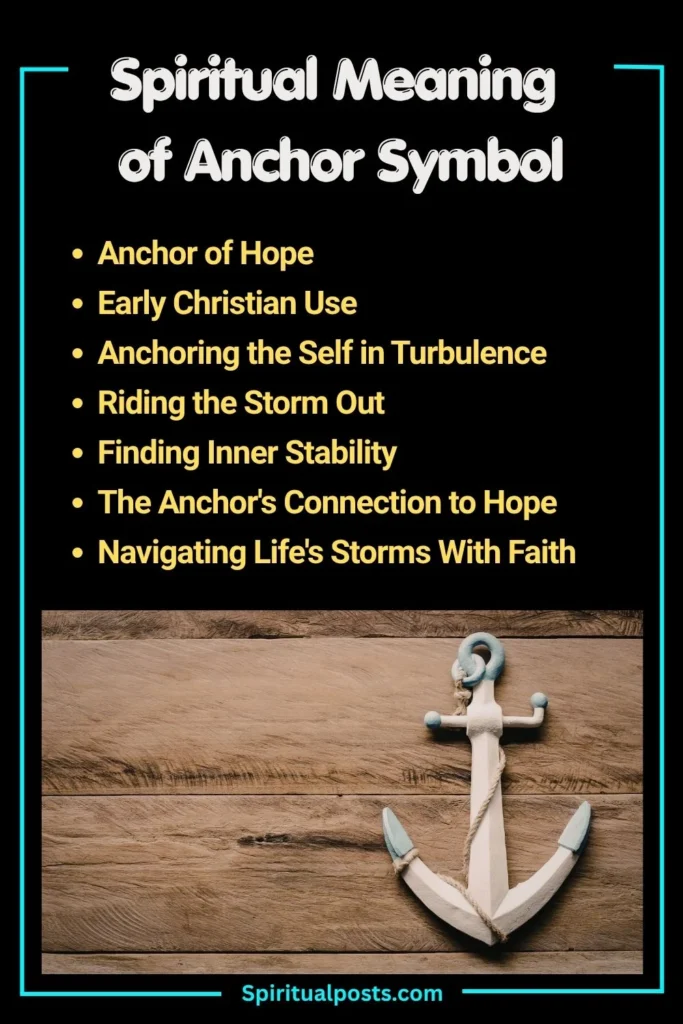
The anchor symbol has a rich history and a deeper significance that goes beyond its maritime origins. In the past, anchors were used as a vital tool for sailors to keep their ships grounded and secure. Today, the anchor has become a universal symbol that represents hope, stability, and faith.
In Christianity, the anchor holds a special meaning. It is often referred to as the “anchor of hope,” symbolizing trust in Jesus Christ. According to the Bible, the anchor represents the hope that believers have in Christ, which is a secure and steadfast hope that cannot be shaken. This symbolism is rooted in the book of Hebrews, where it is written, “We have this hope as an anchor for the soul, firm and secure.”
Across cultures, the anchor signifies stability, security, and steadfastness. It provides a sense of calm and reassurance in turbulent times, reminding individuals to stay grounded and focused on their goals. The anchor’s spiritual meanings are multifaceted, encompassing faith, hope, protection, courage, and strength. In many cultures, the anchor is also seen as a symbol of good luck, prosperity, and new beginnings.
Historically, the anchor has been associated with superstitions and myths. In ancient Greece, for example, the anchor was a symbol of safety and security. Sailors would often get tattoos of anchors to protect themselves from drowning. In other cultures, the anchor is believed to ward off evil spirits and bring good fortune.
Dreams about anchors can have different interpretations depending on the context. Seeing an anchor in your dream may symbolize a need for stability and security in your waking life. It could also indicate that you are feeling grounded and secure, or that you need to anchor yourself to your goals and aspirations.
Culturally and religiously, the anchor has been interpreted in various ways. In Buddhism, the anchor is a symbol of stability and enlightenment. In Celtic culture, the anchor represents strength and resilience. In many African cultures, the anchor is a symbol of good luck and prosperity.
Ancient Roots of the Anchor
The anchor symbol has a rich history that dates back to ancient civilizations, where it represented safety, stability, and hope. In ancient Greece, the anchor was associated with Amphitrite, the goddess of the sea, and was often featured on coins and artifacts. The Phoenicians, a seafaring people, used the anchor symbol to signify their connection to the sea and their reliance on it for trade and commerce.
The anchor’s presence in ancient art and architecture demonstrates its importance in the daily lives of ancient people.
The anchor symbol was often paired with other symbols, such as the dolphin or the star, to convey a sense of protection and guidance. This combination was essential for ancient mariners navigating treacherous waters. The anchor represented a sense of security and reassurance, which was vital for those at sea.
In addition to its practical significance, the anchor also held spiritual meaning. It symbolized hope, steadfastness, and stability in the face of adversity.
In spiritual contexts, the anchor has six significant meanings. It represents hope, steadfastness, stability, comfort, peace, and calmness.
The anchor is also mentioned in the Bible, where it symbolizes hope and steadfastness. In Hebrews 6:19, the anchor is described as a symbol of hope that’s ‘both sure and steadfast.”
Superstitions and myths surrounding the anchor vary across cultures. In some cultures, the anchor is believed to bring good luck, while in others, it’s seen as a symbol of bad luck.
Dream meanings associated with the anchor include stability, security, and hope. In some cultures, seeing an anchor in a dream is believed to signal a sense of calmness and peace.
Culturally and religiously, the anchor has different interpretations. In Christianity, the anchor is seen as a symbol of hope and steadfastness. In other cultures, it represents stability, comfort, and peace.
The anchor’s significance extends beyond its practical uses, representing a sense of security and reassurance that transcends time and cultures.
Symbolism in Christianity and Beyond
The anchor symbol has a rich history that spans across various cultures and religions.
In Christianity, the anchor represents an anchor of hope, offering a sense of stability and reassurance. This symbolism dates back to the 1st century, where early Christians used the anchor to secretly identify meeting places and tombs. During this time, Christians faced persecution, and the anchor symbol served as a discreet way to identify fellow believers.
The anchor’s meaning goes beyond Christianity, as it has been used in various cultures and religions. In ancient Greece, the anchor symbolized safety and hope. In the Roman Empire, it represented stability and strength. The anchor has six spiritual meanings: hope, steadfastness, calmness, comfort, strength, and peace.
In biblical terms, the anchor symbol is mentioned in the book of Hebrews, where it represents the hope that believers have in Jesus Christ. The anchor is seen as a symbol of God’s promise to believers, providing a sense of security and reassurance.
Superstitions and myths surrounding the anchor symbol vary across cultures. In some cultures, the anchor is believed to bring good luck, while in others, it’s seen as a symbol of bad luck. In dream analysis, the anchor symbolizes stability and security in one’s waking life.
Culturally and religiously, the anchor has different interpretations. In Christianity, it represents hope and reassurance, while in ancient Greece, it symbolized safety. The anchor’s meaning can vary depending on the context in which it’s used.
Anchor of Hope
The Anchor of Hope: A Symbol of Stability and Reassurance
The anchor symbol has been a powerful emblem of hope across cultures and faiths, extending far beyond its origins in the maritime world.
This symbol represents stability, security, and steadfastness in the face of turmoil, making it a beacon of hope for those navigating life’s challenges.
The anchor’s significance can be seen in its ability to provide a sense of calm and reassurance, much like a steady anchor holding a ship in place during a storm.
Christianity and the Anchor of Hope
In Christianity, the anchor’s association with hope is deeply rooted in scripture.
The Bible, in Hebrews 6:19, describes hope as ‘an anchor for the soul, firm and secure.’
This verse solidifies the anchor’s role as a symbol of hope, reminding believers that their faith is anchored in something greater than themselves.
This biblical meaning emphasizes the idea that hope isn’t just a feeling, but a secure and stable foundation that can hold fast in turbulent times.
Beyond Christianity: Universal Longing for Stability
The anchor’s symbolism transcends religious boundaries, speaking to humanity’s universal longing for stability and reassurance.
Across cultures, the anchor has been a symbol of hope, stability, and security.
In many cultures, the anchor is seen as a symbol of good luck, prosperity, and safe passage.
In some superstitions, the anchor is believed to bring good fortune and protection from harm.
In myths, the anchor is often associated with the gods of the sea, representing their power and control over the oceans.
The Six Spiritual Meanings of the Anchor
The anchor has six spiritual meanings that resonate with people from all walks of life.
Firstly, it represents hope and reassurance in times of turmoil.
Secondly, it symbolizes stability and security in the face of uncertainty.
Thirdly, it embodies steadfastness and perseverance in the face of adversity.
Fourthly, it represents a connection to something greater than oneself.
Fifthly, it symbolizes the idea of being grounded and rooted in one’s faith or beliefs.
Lastly, it represents the idea of safe passage and protection from harm.
Dream Meanings and Cultural Interpretations
In dream analysis, the anchor is often seen as a symbol of stability and security.
If you dream of an anchor, it may indicate that you’re seeking stability and reassurance in your waking life.
In cultural and religious interpretations, the anchor is often seen as a symbol of good luck and prosperity.
In some cultures, the anchor is believed to bring good fortune and protection from harm.
Early Christian Use
Early Christian Use of the Anchor Symbol
During the 2nd century, the anchor symbol was used by early Christians as a secret sign of their faith. This was a time when the Roman Empire was persecuting Christians, and they needed a way to express their beliefs without getting caught.
The anchor symbolized hope, steadfastness, and stability, which were essential qualities for Christians facing brutal oppression. It represented a sense of calm and peace in the midst of turmoil. The anchor was often paired with other Christian symbols, such as the fish and the cross, to reinforce its connection to Christ and the Christian faith.
The anchor symbol held significant meaning when it appeared on tombstones. It represented the deceased person’s hope in eternal life and their trust in Christ as their anchor in times of turmoil.
In biblical terms, the anchor symbol is mentioned in the book of Hebrews, where it’s written, ‘We have this hope as an anchor for the soul, firm and secure’ (Hebrews 6:19). This verse emphasizes the idea that hope is what keeps us grounded and secure, just like an anchor keeps a ship steady.
The anchor symbol has six spiritual meanings: hope, steadfastness, stability, calmness, peace, and eternal life.
In terms of superstitions and myths, the anchor is often seen as a good luck charm, especially for sailors and travelers.
In dreams, the anchor can symbolize a sense of security and stability.
Culturally, the anchor has been interpreted as a symbol of strength and resilience.
In religious contexts, the anchor is often seen as a reminder of God’s presence and guidance in our lives.
Anchoring the Self in Turbulence
When life gets tough, it can feel like you’re lost at sea, struggling to stay afloat amidst the turbulent waters of challenges and uncertainties. The anchor symbol has been a beacon of hope for many, serving as a powerful reminder of stability and strength in the face of adversity. But where did this symbolism originate, and how can it help you navigate life’s stormy weather?
Historically, anchors have been used as a symbol of safety and security since ancient times. In the early Christian church, the anchor was seen as a symbol of hope and steadfastness, with Hebrews 6:19 declaring, ‘We have this hope as an anchor for the soul, firm and secure.’ This biblical reference solidified the anchor’s status as a potent symbol of spiritual guidance and reassurance.
Beyond its biblical significance, the anchor has been imbued with a range of spiritual meanings across various cultures. For instance, it can represent stability, strength, and resilience, as well as a connection to the divine or a higher power. In some spiritual traditions, the anchor is seen as a symbol of grounding, helping individuals stay rooted and centered in the face of chaos. It can also signify patience, endurance, and perseverance, reminding us that even in the darkest of times, there’s always hope for a brighter future.
In addition to its spiritual connotations, the anchor has also been steeped in superstition and myth. In ancient Greece, for example, the anchor was seen as a symbol of good luck, with sailors often carrying small anchors as talismans to ward off bad fortune. Similarly, in many cultures, dreaming of an anchor is believed to signify a sense of security and stability, or even a warning to hold fast to one’s values and principles.
Across different cultures and religions, the anchor has been interpreted in various ways. In Buddhism, the anchor is seen as a symbol of mindfulness, reminding practitioners to stay grounded in the present moment. In some African cultures, the anchor is associated with the goddess of the sea, representing femininity, nurturing, and protection.
Despite its positive connotations, the anchor has also been associated with bad luck in certain contexts. For instance, in some nautical traditions, it’s believed that carrying an anchor as a charm can actually attract bad luck, rather than repel it.
Riding the Storm Out
Riding the Storm Out
You’re probably familiar with tough times, and despite that, you’re still standing strong. This is a great sign of your ability to cope with life’s challenges. The anchor symbol has a special meaning in this context. It reminds you that you don’t have to be controlled by the ups and downs of life. Instead, you can focus on the present moment and wait for the difficult times to pass.
The anchor symbol has a rich history and meaning. In the ancient world, anchors were used to keep ships stable in rough seas. Today, the anchor symbol represents stability, strength, and hope. In Christianity, the anchor is a symbol of faith and steadfastness. According to the Bible, the anchor is a symbol of hope, as mentioned in Hebrews 6:19, ‘We have this hope as an anchor for the soul, firm and secure.’ In some cultures, the anchor is seen as a symbol of good luck and protection.
In spiritual terms, the anchor has six meanings: stability, strength, hope, faith, calmness, and peace. These meanings remind us that even in turbulent times, we can find comfort and solace in our values, faith, or sense of purpose. By holding onto these anchors, we can navigate life’s storms with confidence and dignity.
Dreams about anchors often symbolize a need for stability or a sense of being grounded. According to superstition, carrying an anchor charm can bring good luck and protection. In some myths, anchors were seen as a symbol of safe passage and protection from the gods.
When we anchor ourselves in our values, faith, or sense of purpose, we’re not avoiding life’s challenges, but rather learning to navigate them with confidence and strength. By doing so, we’re taking back control of our lives and refusing to let the storms define us. In the end, anchoring ourselves is about riding the storm out with dignity and strength.
Finding Inner Stability
Finding Inner Stability in Turbulent Times
Imagine being on a ship in the middle of a stormy ocean. The waves are crashing against the ship, and the wind is howling loudly. It’s a scary situation. But what if you’d a special anchor that could keep your ship stable and grounded, no matter how rough the sea got? That’s what inner stability is – a sense of calm and confidence that helps you navigate life’s challenges.
In times of uncertainty, it’s easy to feel lost and unsure of what to do. But when you have inner stability, you’re like a ship with a strong anchor that keeps you from drifting away. You stay focused and grounded, even when everything around you is changing. This anchor is your core self – your values, beliefs, and principles. These are the things that make you who you’re and give you a sense of direction and purpose.
The Symbolism of Anchors
Anchors have been a symbol of stability and hope for thousands of years. In ancient Greece, anchors were a symbol of safety and security. In Christianity, anchors represent faith and steadfastness. In many cultures, anchors are seen as a symbol of good luck and protection. In dreams, anchors can represent a desire for stability and security. Having a strong anchor in your life can bring you a sense of peace and confidence.
Six Spiritual Meanings of Anchors
In spiritual terms, anchors can represent six important aspects of our lives:
- Faith: Anchors symbolize our trust and faith in something greater than ourselves.
- Stability: Anchors represent stability and grounding in turbulent times.
- Hope: Anchors give us hope for a better future and a sense of direction.
- Protection: Anchors protect us from the storms of life and keep us safe.
- Courage: Anchors give us the courage to stand firm in the face of challenges.
- Guidance: Anchors guide us towards our goals and help us stay on track.
Biblical Meaning of Anchors
In the Bible, anchors are mentioned in the book of Hebrews, where it says, ‘We have this hope as an anchor for the soul, firm and secure.’ (Hebrews 6:19) Here, anchors represent the hope of salvation and the promise of eternal life.
Superstitions and Myths
In some cultures, anchors are believed to bring good luck and protection. Sailors would often carry an anchor tattoo or wear an anchor charm to keep them safe at sea. In other cultures, anchors are seen as a symbol of bad luck, representing a loss of freedom or restriction.
Cultural and Religious Interpretations
In many cultures, anchors are seen as a symbol of stability and hope. In Christianity, anchors represent faith and steadfastness. In Buddhism, anchors represent the anchor of mindfulness, which keeps us grounded in the present moment.
The Anchor’s Connection to Hope
The Anchor’s Connection to Hope
The anchor has been a powerful symbol for centuries, offering a sense of comfort and reassurance to people across different cultures and generations. You might’ve seen it on gravestones, worn as jewelry, or displayed on flags, but do you know the significance behind this enduring symbol? The anchor’s connection to hope lies in its ability to provide stability and security, giving people a sense of calm during turbulent times.
Historically, the anchor was a crucial tool for sailors, helping them navigate through treacherous waters and stay grounded in the face of strong currents. This nautical background has led to the anchor’s widespread adoption as a symbol of hope, resilience, and optimism. When you’re feeling lost or uncertain, the anchor reminds you to hold onto hope, trusting that better days are ahead.
In terms of spiritual meanings, the anchor is often associated with six key themes: stability, strength, hope, peace, calmness, and confidence. In Christianity, the anchor is seen as a symbol of Christ, representing salvation and eternal life. According to Hebrews 6:19, ‘We have this hope as an anchor for the soul, firm and secure.”
Superstitions and myths surrounding the anchor vary across cultures. In ancient Greece, the anchor was seen as a symbol of good luck, while in some African cultures, it’s believed to ward off evil spirits. In dream analysis, the anchor can represent a longing for stability or a need for emotional grounding.
Culturally and religiously, the anchor holds different meanings. In Buddhism, it symbolizes enlightenment and spiritual growth, while in the Navy, it represents honor, courage, and commitment. In some societies, the anchor is seen as a symbol of bad luck or even death, particularly when displayed upside down.
When life gets tough, and challenges come our way, it’s easy to feel lost and alone. The storms of life can be overwhelming, making us wonder if we’ll ever find our way out of the darkness. But did you know that holding onto faith can be the anchor that keeps us grounded and hopeful?
In ancient times, anchors were used to keep ships stable during fierce storms. Similarly, faith serves as our anchor, symbolizing stability, hope, and security. The anchor symbol has been a popular Christian symbol for centuries, representing steadfastness and faith in God. In biblical times, the anchor was seen as a symbol of hope and security, as mentioned in Hebrews 6:19, ‘We have this hope as an anchor for the soul, firm and secure.’
Having faith doesn’t mean we’re immune to life’s challenges, but it gives us the courage to face them head-on. When we trust in a higher power, we can draw strength and comfort, knowing we’re not alone. This trust can help us navigate life’s storms, even when the winds of adversity howl and the waves of doubt crash against us.
In many cultures, anchors are seen as symbols of good luck, stability, and protection. In dreams, anchors can represent a sense of security and stability. However, in some superstitions, anchors are believed to bring bad luck if displayed in the home. Despite these varying interpretations, the anchor remains a powerful symbol of faith and hope.
The anchor represents: 1) hope, 2) stability, 3) faith, 4) security, 5) comfort, and 6) trust. In many religious interpretations, the anchor is seen as a symbol of God’s promise to guide us through life’s challenges.
Unshakable Foundation in Spirituality
Having a strong spiritual foundation is like having a solid anchor that keeps you grounded when life gets rough. The anchor symbol has been a powerful symbol across many cultures and religions, reminding us that our faith can be an unshakable foundation that holds fast even in the midst of turmoil. This symbol dates back to ancient Greece, where it was a symbol of hope and steadfastness. In Christianity, the anchor symbol is often associated with St. Clement, who was martyred by being tied to an anchor and thrown into the sea.
Having an unshakable foundation in spirituality means that you have trust, hope, and conviction in your beliefs. You cultivate this foundation through practices like meditation, prayer, and self-reflection. When you deepen your spiritual connection, you become more resilient in the face of challenges. You’re less swayed by the whims of fate and more grounded in your sense of purpose. This foundation gives you the strength to stay the course, to hold fast to your values and beliefs, even when the winds of change are howling around you.
In many spiritual traditions, the anchor symbol has six spiritual meanings: hope, steadfastness, calmness, stability, strength, and courage. In biblical terms, the anchor symbol represents the hope that we’ve in God, which is a steady and reliable anchor for our souls. In some superstitions, the anchor symbol is believed to bring good luck and protection from harm. In dream interpretations, the anchor symbol can represent a need for stability and grounding in one’s life.
Across cultures and religions, the anchor symbol has been interpreted in various ways. In ancient Greece, it was a symbol of hope and steadfastness. In Christianity, it represents the hope that we’ve in God. In some African cultures, the anchor symbol is believed to have healing properties. In many spiritual traditions, the anchor symbol is a reminder that our faith can be an unshakable foundation that holds fast even in the midst of turmoil.
A Final Note
The anchor symbol has a rich history that dates back to ancient times. In the early days of sailing, anchors were crucial for ships to stay safe in the harbor, preventing them from drifting away or crashing into the shore. Over time, the anchor symbol evolved to represent more than just a sailing tool; it became a powerful symbol with deep spiritual meanings.
One of the most significant meanings of the anchor symbol is its representation of hope and stability. In Christianity, the anchor is seen as a symbol of Christ, who’s the anchor of our souls. This biblical meaning is rooted in the Bible, specifically in the book of Hebrews, where it’s written that ‘we have this hope as an anchor for the soul, firm and secure‘ (Hebrews 6:19). This verse emphasizes the idea that our faith in God is what keeps us grounded and stable, even in the midst of life’s challenges.
The anchor symbol also has six spiritual meanings that are worth exploring. Firstly, it represents stability and calmness in the face of adversity. Secondly, it symbolizes hope and optimism for a better future. Thirdly, it serves as a reminder to stay grounded and focused on our goals. Fourthly, it represents protection and safety from harm. Fifthly, it embodies the idea of perseverance and resilience. Lastly, it symbolizes the connection between the physical and spiritual realms.
In addition to its spiritual meanings, the anchor symbol has been associated with various superstitions and myths. For instance, in ancient Greece, it was believed that the anchor symbol could bring good luck and protection to sailors. In some cultures, the anchor symbol is seen as a sign of bad luck, particularly if it’s displayed upside down.
Dreams about anchors can also have different interpretations. According to dream analysts, seeing an anchor in a dream may symbolize a need for stability and security in one’s waking life. On the other hand, losing an anchor in a dream may indicate a sense of feeling lost or ungrounded.
Culturally and religiously, the anchor symbol has been interpreted in various ways. In Christianity, as mentioned earlier, it represents Christ and the hope of salvation. In other cultures, it may symbolize protection, stability, or good luck.
In conclusion, the anchor symbol is more than just a maritime navigation tool; it holds a deeper significance that transcends its physical purpose. By exploring its spiritual meanings, biblical roots, and cultural interpretations, we can gain a deeper appreciation for this powerful symbol.
You Might Also Like
1)
2)
3)
4)
5)