Bindweed Spiritual Meaning and Symbolism of Persistence and Entanglement

As a resilient and adaptable plant, bindweed offers a wealth of spiritual insights. Its tenacity symbolizes the power of unwavering determination, while its rapid growth represents the cleansing of stagnant energy and limiting beliefs. Bindweed’s interconnectedness also speaks to the underlying unity connecting all living beings, inspiring harmony and responsibility. But what do these fascinating meanings reveal about the human experience? Uncover the deeper spiritual significance of this captivating plant and explore how its symbolism can guide your own personal growth and transformation.
Key Takeaways
- Bindweed symbolizes resilience, adaptability, and the capacity to overcome adversity, mirroring human potential to thrive despite challenges.
- The plant’s tenacious growth and ability to flourish in diverse environments inspire determination, perseverance, and the development of an unshakable spirit.
- Bindweed’s rapid spread and cleansing ability represent spiritual transformation, renewal, and the release of energetic blockages or negative patterns.
- The plant’s interconnectedness and entwining growth patterns symbolize the importance of balance, harmony, and recognizing one’s impact on the whole.
Introduction to Bindweed
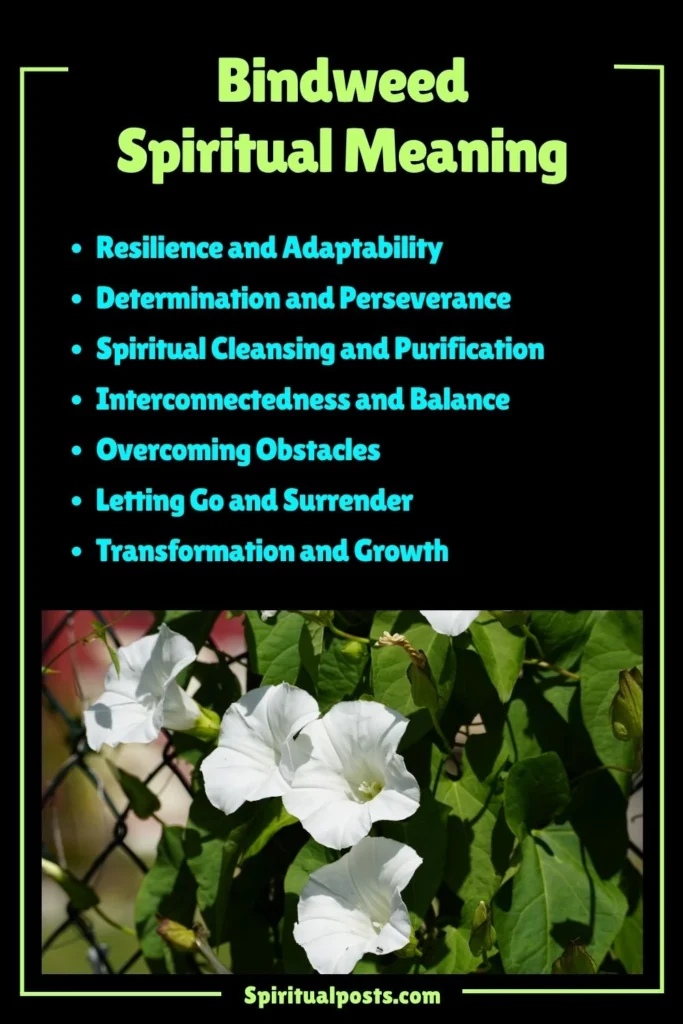
Bindweed, a pervasive and often unwelcome vine, is a plant you’ve likely encountered in your garden or around your home. This resilient species, also known as morning glory or field bindweed, is a member of the Convolvulaceae family.
It’s known for its ability to quickly spread and intertwine with other plants, making it a challenge for gardeners to control. Bindweed’s distinctive characteristics include its heart-shaped leaves and delicate, funnel-shaped white or pink flowers that bloom in the morning.
Its vines can grow up to 6 feet long, with a deep, extensive root system that makes it difficult to eradicate. Despite its invasive nature, bindweed has been used in traditional medicine and can even be utilized as a natural dye.
Understanding the biology and behavior of bindweed is crucial for effectively managing its growth and preventing it from overtaking your desired plants. By familiarizing yourself with this persistent plant, you can develop strategies to maintain a harmonious and well-tended garden.
What Does It Mean When You See a Bindweed ?
Seeing a bindweed can signify various spiritual meanings, depending on the context and your personal beliefs. Bindweed is often associated with persistence, resilience, and the ability to overcome obstacles. When you encounter a bindweed, it may be a reminder to stay determined and keep pushing forward, even in the face of challenges. The plant’s ability to thrive in diverse environments can symbolize adaptability and the power to flourish in difficult circumstances.
Additionally, bindweed’s tendency to wrap itself around other plants can be interpreted as a metaphor for the ways in which our lives can become entangled with others. This may represent the importance of setting boundaries, maintaining balance, and finding your own path amidst the complexities of relationships and responsibilities. Alternatively, the bindweed’s clinging nature could signify the need to let go, release attachments, and embrace the flow of life.
Ultimately, the spiritual significance of a bindweed sighting is deeply personal and can be influenced by your own experiences, cultural beliefs, and intuition. Pay attention to your inner responses and consider how the bindweed’s qualities resonate with your current life situation or spiritual journey.
Bindweed Symbolism
The symbolic meanings of bindweed extend beyond its tenacious growth, reflecting the complexities and nuances of your own life journey. This resilient plant is often seen as a metaphor for perseverance, as it stubbornly clings to life, thriving even in the most challenging environments. Its ability to adapt and spread rapidly can symbolize your own capacity for flexibility and growth, even in the face of adversity.
At the same time, bindweed’s tendency to overtake and envelop other plants represents the need to maintain balance and boundaries in your life. It can serve as a reminder to avoid becoming entangled in situations or relationships that may constrict your personal development.
The delicate, ephemeral flowers of the bindweed plant can also symbolize the fleeting nature of life, encouraging you to cherish each moment and find beauty in the transient.
Ultimately, the spiritual meanings of bindweed encourage you to embrace your own resilience, adaptability, and the importance of maintaining equilibrium as you navigate the twists and turns of your life’s journey.
7 Spiritual Meanings of Bindweed
Bindweed’s spiritual meanings run deep, reflecting its resilient and adaptable nature.
Its unwavering determination and perseverance symbolize the power to overcome obstacles.
Its association with spiritual cleansing and purification can guide your journey towards balance and interconnectedness.
Resilience and Adaptability
Despite its reputation as a pesky weed, bindweed’s remarkable resilience and adaptability offer profound spiritual teachings. Its ability to thrive in diverse environments mirrors the human capacity to overcome adversity and find growth in challenging circumstances.
Bindweed’s tenacious nature exemplifies the power of persistence. Its deep, extensive root system and sprawling vines allow it to flourish even in poor soil conditions or with limited resources. Similarly, when faced with life’s obstacles, you can cultivate the same unwavering determination to push through and emerge stronger.
Bindweed’s ability to adapt to different climates and soil types reflects the human potential for flexibility and versatility. By embracing change and finding creative solutions, you can navigate life’s ups and downs with grace and resilience.
The bindweed’s prolific growth, spreading rapidly and covering large areas, symbolizes the boundless potential for expansion and transformation within the human spirit.
Just as bindweed’s delicate flowers bloom amidst its tangled vines, you can discover beauty and joy in the midst of struggle, reminding you to find moments of wonder even in the face of adversity.
The bindweed’s enduring presence, thriving where others may wither, encourages you to cultivate an unshakable sense of hope and the unwavering belief in your ability to overcome any challenge.
Determination and Perseverance
How can the bindweed’s determination and perseverance inspire you to overcome life’s obstacles? Its unrelenting growth, spreading its vines ever further, exemplifies the power of steadfast resolve. Just as the bindweed tenaciously clings to its place, you too can cultivate an unwavering spirit that refuses to be deterred, no matter the challenges that arise.
The bindweed’s remarkable ability to thrive in diverse environments, from rocky soil to manicured gardens, demonstrates its capacity to adapt and survive. This quality can be a powerful metaphor for your own life journey. When faced with setbacks or unfavorable conditions, you can draw inspiration from the bindweed’s tenacity and find the strength to push forward, persevering through adversity.
Just as the bindweed’s delicate flowers bloom amidst its persistent growth, you can nurture your own dreams and aspirations, even in the face of difficulty. By embracing the bindweed’s lessons of determination and resilience, you can develop the fortitude to overcome obstacles and achieve your goals, no matter how daunting they may seem.
Spiritual Cleansing and Purification
Beyond its lessons of determination, the bindweed offers a deeper spiritual significance – its role in cleansing and purification. As you navigate life’s challenges, the bindweed can serve as a symbol of spiritual renewal, guiding you to release what no longer serves and embrace a state of inner clarity.
The bindweed’s rapid growth and ability to spread can represent the cleansing of stagnant energy and the shedding of limiting beliefs or behaviors. Its resilience and adaptability mirror the process of spiritual transformation, where you let go of the old to make way for the new.
By observing the bindweed’s tenacious nature, you can be inspired to:
- Identify and release energetic blockages or negative patterns in your life
- Cultivate a willingness to embrace change and personal growth
- Strengthen your connection to the natural world and its rhythms of renewal
- Develop a deeper sense of self-awareness and inner peace
As you work with the bindweed’s symbolic meaning, you may find yourself on a journey of cleansing and purification, unlocking new levels of spiritual awareness and wholeness.
Interconnectedness and Balance
The bindweed’s capacity for interconnectedness offers a distinct spiritual lesson, inviting you to navigate life’s inherent balance. This resilient plant’s ability to entwine itself around other vegetation symbolizes the underlying unity that connects all living beings. Just as the bindweed’s vines weave a tapestry of growth, you’re called to recognize the intricate web of relationships that sustain the natural world and your own existence.
Embracing this concept of interconnectedness encourages a holistic perspective. You become aware of how your actions and choices reverberate, impacting the delicate equilibrium of the whole. This understanding fosters a sense of responsibility, guiding you to make decisions that promote harmony rather than disruption.
Moreover, the bindweed’s adaptability and resilience offer insights into maintaining balance. Its ability to thrive in diverse environments reminds you to stay flexible and open to the ebb and flow of life. By emulating this flexibility, you can navigate challenges and changes with grace, preserving the equilibrium that sustains your spiritual well-being.
Overcoming Obstacles
Just as the bindweed’s resilience sustains it through challenges, you can draw on its example to overcome obstacles in your own life. This tenacious plant offers valuable lessons on persistence and adaptability in the face of adversity.
The bindweed’s ability to thrive in a wide range of environments, from gardens to rocky terrain, demonstrates its capacity to adapt and find ways to grow, even in the most inhospitable conditions. This can inspire you to remain flexible and open-minded when confronting difficulties, instead of rigidly clinging to a single approach.
The bindweed’s relentless growth, as it spreads its vines to climb over and envelop other plants, symbolizes the power of determination. No matter how many times it’s cut back, the bindweed persists, a reminder that with unwavering focus and resolve, you can overcome even the most formidable obstacles.
Letting Go and Surrender
While the bindweed’s persistence symbolizes the power to overcome, its sprawling, enveloping nature also reflects a deeper spiritual lesson – the importance of letting go and surrender. Much like the bindweed’s tendrils that cling tightly to their supports, we often find ourselves grasping onto the familiar, resisting change and growth. However, the bindweed teaches us that sometimes, the greatest strength comes from embracing the unknown and allowing ourselves to be carried by the flow of life.
Transformation and Growth
Amidst the bindweed’s relentless growth, you’ll uncover the profound spiritual lessons of transformation and renewal. This resilient plant, often seen as a pesky weed, holds immense symbolic significance in the realm of personal growth and evolution.
Bindweed’s ability to thrive in diverse environments mirrors our own capacity to navigate life’s changes and challenges. Its tenacity reminds us to embrace flexibility and find innovative ways to overcome obstacles.
The bindweed’s unwavering determination to spread and flourish teaches us the importance of tenacity. No matter the setbacks, we can cultivate the strength to persevere and achieve our goals.
The bindweed’s intricate web of vines symbolizes the interconnectedness of all things. This serves as a reminder to foster meaningful relationships and see ourselves as part of a larger, dynamic whole.
Bindweed’s capacity to bounce back from adversity and regenerate itself inspires us to develop our own inner strength and resilience, empowering us to rise above life’s difficulties.
The bindweed’s cyclical growth pattern mirrors the natural cycles of birth, death, and rebirth. This reminds us that transformation and growth are constant, and that we always have the opportunity to reinvent ourselves.
Bindweed Symbolism in Different Cultures and Contexts
Bindweed has long held symbolic meaning across diverse cultures. From its use in Native American rituals to its associations with Celtic fertility deities and Nordic myths, this resilient plant has captured the imaginations of people around the world.
Similarly, in African and Eastern traditions, bindweed’s tenacious nature and rapid growth have made it a potent symbol, representing themes ranging from perseverance to the cycle of life.
Native American Culture
In Native American cultures, bindweed was often imbued with profound symbolic significance, reflecting the plant’s resilience and ability to thrive in diverse environments. This evergreen vine, with its delicate white or pink flowers, was seen as a representation of the interconnectedness of all living things and the cyclical nature of life.
In some tribes, bindweed was associated with the concept of ‘Mother Earth,’ representing the feminine principle of nurturing and sustaining all life. Its ability to spread and adapt was seen as a reflection of the Earth’s constant renewal and regeneration.
The plant’s twining growth habit was also interpreted as a symbol of the journey of the soul, with the vine’s twists and turns mirroring the spiritual path and the challenges encountered along the way.
Many Native American healers and spiritual leaders used bindweed in various rituals and ceremonies, believing that its properties could promote healing, protection, and the attainment of inner peace.
The plant’s tenacity and persistence in the face of adversity were also seen as admirable qualities, inspiring Native Americans to emulate these traits in their own lives.
Bindweed’s capacity to adapt and flourish in both cultivated and wild spaces was viewed as a metaphor for the resilience and adaptability of the human spirit.
Celtic Culture
While Native American cultures revered bindweed for its symbolic significance, the ancient Celts also imbued the plant with profound meanings within their own spiritual and mythological traditions.
In Celtic lore, bindweed was often associated with the concept of duality and the cyclical nature of life. Its twining, persistent growth was seen as a representation of the interconnectedness of all things, as well as the eternal cycle of birth, death, and rebirth.
Additionally, the plant’s ability to thrive in both cultivated and wild spaces was interpreted as a symbol of the balance between the natural and the domestic realms. Celtic druids and healers frequently incorporated bindweed into their rituals and remedies, believing it possessed the power to promote harmony, protection, and spiritual growth.
The Celts also linked bindweed to the feminine divine, viewing the plant as a manifestation of the goddess’s ever-renewing fertility and abundance. This association with the sacred feminine contributed to the plant’s revered status within Celtic spiritual and cultural practices.
Nordic Culture
Across the Northern lands, the Norsemen too revered the twining tendrils of bindweed, imbuing the plant with symbolic significance within their rich cultural tapestry. From the dramatic fjords to the rugged tundra, this resilient vine was seen as a representation of the strength, endurance, and adaptability that were so crucial to survival in the unforgiving Nordic climate.
In Norse mythology, bindweed was associated with the goddess Freya, a powerful figure linked to love, fertility, and the cycle of life and death. The plant’s ability to entwine and cling was seen as a metaphor for the deep bonds of family and community that sustained the Norse people.
The intricate knotwork and spiraling patterns of bindweed were also believed to hold protective and apotropaic properties, warding off evil spirits and bringing good fortune to those who incorporated it into their dwellings or rituals.
Additionally, the plant’s tenacious nature was admired for its capacity to thrive in even the most inhospitable environments, mirroring the resilience and self-reliance that were hallmarks of Nordic culture.
Bindweed’s versatility as a source of food, medicine, and even fiber for clothing further cemented its place as a revered and multifaceted symbol within the Nordic worldview.
African Culture
Shifting our focus to Africa, you’ll find that bindweed’s symbolic significance has also taken root within the diverse cultural tapestry of the continent. In many African traditions, the plant is revered for its resilience and ability to thrive in even the harshest environments. This tenacity is often seen as a metaphor for the human spirit, reflecting the endurance and adaptability of the people.
Moreover, the bindweed’s tendency to intertwine and spread rapidly is sometimes interpreted as a symbol of interconnectedness and community. In certain regions, the plant is used in rituals and ceremonies that celebrate the unity of the tribe or village.
The delicate, yet persistent flowers are also believed to represent the fragility and strength of life, reminding us to cherish the present moment and find beauty in unexpected places.
As you explore the cultural tapestry of Africa, you’ll discover that the humble bindweed holds a unique and revered place, serving as a testament to the resilience, community, and spirituality that defines the continent.
Eastern Culture
Venturing eastward, you’ll find that bindweed’s symbolic significance has taken on nuanced meanings within the diverse cultural tapestry of the East. In ancient Chinese philosophy, the bindweed’s ability to entwine and climb is seen as a metaphor for the interconnectedness of all things, representing the harmonious balance between yin and yang.
In Hindu mythology, the bindweed is associated with the divine consort Lakshmi, the goddess of wealth, prosperity, and fertility, symbolizing abundance and the cycles of life.
Japanese traditions view the bindweed as a symbol of perseverance, as its tenacious growth reflects the resilience and adaptability of the human spirit.
In Tibetan Buddhism, the bindweed’s delicate yet persistent nature is used to depict the impermanence of worldly attachments and the importance of letting go.
Across the Middle East, the bindweed’s intricate patterns have been incorporated into intricate textile designs, echoing the region’s rich artistic heritage and reverence for the natural world.
Hindu Culture
In Hindu mythology, the bindweed is closely associated with the divine consort Lakshmi, the goddess of wealth, prosperity, and fertility, symbolizing abundance and the cycles of life. The delicate, sprawling vines of the bindweed are seen as a representation of Lakshmi’s gentle, nurturing nature and her ability to bring blessings of prosperity to those she favors.
Within the Hindu tradition, the bindweed is often used in religious rituals and ceremonies, its presence believed to attract the benevolent energies of Lakshmi. Devotees may weave the vines into garlands or use them to adorn sacred spaces, inviting the goddess’s influence and blessings.
The plant’s resilience and ability to thrive in diverse conditions are also seen as symbolic of Lakshmi’s power to overcome challenges and provide for her devotees, even in times of adversity.
Additionally, the bindweed’s rapid growth and tendency to spread are interpreted as a metaphor for the expansive, ever-increasing nature of wealth and abundance when under Lakshmi’s divine protection.
Arts and Literature
While the bindweed’s spiritual significance in Hindu culture is well-established, its symbolism has also manifested across various artistic and literary traditions worldwide. From ancient Greece to medieval Europe, the bindweed’s tenacious and invasive nature has been imbued with profound meanings, often reflecting the human condition.
In ancient Greek mythology, the bindweed was associated with Convolvulus, the goddess of resisting oppression, symbolizing the persistent struggle for freedom and self-determination.
In medieval European heraldry, the bindweed’s twining vines were depicted on coats of arms, representing the virtues of perseverance, resilience, and the ability to overcome obstacles.
In Japanese haiku poetry, the bindweed’s delicate yet persistent flowers have been employed as metaphors for the ephemeral nature of life and the beauty found in the face of adversity.
In contemporary visual arts, the bindweed’s intricate patterns and ability to adapt to diverse environments have inspired artists to explore themes of interconnectedness, adaptation, and the resilience of nature.
The bindweed’s prevalence in various folkloric traditions across the globe further attests to its universal appeal as a symbol of the human experience, from the struggles of survival to the triumph of the indomitable spirit.
Mythology
The bindweed’s symbolic significance extends far beyond the artistic and literary realms, as its enduring presence in the mythologies of diverse cultures worldwide underscores its profound resonance with the human experience.
In ancient Greek mythology, for instance, the bindweed was associated with Persephone, the goddess of the underworld, symbolizing the cyclical nature of life, death, and rebirth.
Similarly, in Celtic folklore, the bindweed was seen as a representation of the interconnectedness of the physical and spiritual worlds, its tenacious vines metaphorically binding the realms of the living and the dead.
Across Asia, the bindweed has been revered for its resilience and adaptability, with the Japanese incorporating it into their Shinto traditions as a symbol of perseverance and the ability to thrive in the face of adversity.
In Hindu mythology, the bindweed’s resemblance to a snake has led to its association with the divine serpent Shesha, the embodiment of the cyclical nature of the universe.
Ultimately, the bindweed’s enduring presence in the mythologies of diverse cultures underscores its timeless ability to captivate the human imagination and embody the complexities of the human experience.
Bindweed Biblical Meanings
Bindweed’s biblical meanings are found in several passages, offering insight into this plant’s symbolic significance. From its ability to quickly overtake and ensnare other plants to its persistent and resilient nature, bindweed has long been associated with concepts of temptation, sin, and the human struggle against spiritual adversity.
In the book of 2 Kings, bindweed is used as a metaphor for the corrupting influence of idolatry, with the verse stating ‘the high places weren’t taken away: the people still sacrificed and burnt incense in the high places’ (2 Kings 17:9).
The book of Hosea likens bindweed to the ‘cords of a man’ (Hosea 11:4), suggesting the plant’s ability to entangle and bind, much like the snares of sin that can entrap the human soul.
Proverbs 5:22 warns that ‘the iniquities of the wicked ensnare him, and he’s held fast in the cords of his sin,’ evoking the persistent and stifling nature of bindweed.
In the parable of the sower, Jesus uses the image of bindweed, or ‘thorns,’ to represent the ‘cares of the world and the deceitfulness of riches’ that can choke out the growth of faith (Matthew 13:22).
The book of Isaiah depicts bindweed as a symbol of the transient and fleeting nature of earthly glory, stating ‘the glory of his [Samaria’s] forest and of his fruitful field will fade’ (Isaiah 28:1).
Spiritual Meaning of Dream About Bindweed
When you dream of bindweed, it often symbolizes the entangling influences in your life that hinder your spiritual growth. The dream may be a warning about temptations, distractions, or unhealthy attachments that are impeding your progress on your spiritual journey.
Bindweed, with its persistent and invasive nature, can represent the way negative thoughts, emotions, or behaviors can creep into your life and choke out your ability to focus on your spiritual development. The dream may be signaling that you need to carefully examine the areas of your life where you are allowing yourself to become entangled, potentially at the expense of your connection with the divine.
| Spiritual Meaning | Possible Interpretation |
|---|---|
| Entanglement | Distractions or unhealthy attachments hindering spiritual growth |
| Persistence | Difficulty releasing negative patterns or letting go of the past |
| Invasiveness | Inability to set boundaries or prioritize spiritual practices |
| Choking | Spiritual vitality being smothered by worldly concerns |
| Overgrowth | Spiritual life becoming overwhelmed by mundane matters |
Paying attention to the details and emotions present in your dream about bindweed can provide valuable insights into the areas of your life that require your focused attention and intention. By addressing these issues, you can reclaim your spiritual freedom and continue on your path of growth and enlightenment.
Bindweed Spirit Animal, Totem, and Power Animal
In addition to its symbolic dream significance, bindweed can also serve as a spirit animal, totem, or power animal, providing valuable lessons and insights on your spiritual journey. As a spirit animal, bindweed may appear to you when you need to embrace flexibility, adaptability, and persistence in the face of challenges. Its resilience and ability to thrive in diverse environments can inspire you to cultivate these qualities within yourself.
As a totem, bindweed can represent:
- Resilience and the ability to overcome obstacles
- Adaptability and the willingness to change with circumstances
- The power of persistence and determination
- Overcoming limitations and expanding your reach
Working with the bindweed spirit animal or totem can help you:
- Develop a more resilient and adaptable mindset
- Cultivate the determination to persevere through difficulties
- Expand your horizons and push beyond self-imposed limitations
A Final Note
Bindweed’s resilience, adaptability, and interconnectedness make it a powerful spiritual symbol.
Its rapid growth and spreading ability signify the clearing of stagnant energy and limiting beliefs, encouraging transformation and renewal.
Bindweed’s symbolism also reflects the underlying unity connecting all living beings, promoting harmony, responsibility, and the maintenance of spiritual well-being.
Embracing the lessons of this remarkable plant can empower you to overcome adversity and cultivate a more vibrant, balanced, and meaningful life.