10 Spiritual Meanings of Thyme, and Its Magical Properties

Thyme is a small herb with a big history. You might know it as a kitchen spice, added to soups and stews for flavor. But long before it sat in your spice rack, thyme was revered for its spiritual and magical properties. Ancient Egyptians used it for embalming. Ancient Greeks burned it as incense in their temples. Medieval Europeans placed thyme under pillows to ward off nightmares.
Thyme’s spiritual power comes from its association with courage, purification, and connection to the spirit world. Its small, fragrant leaves carry the energy of the earth. Its ability to grow in tough conditions—rocky soil, dry climates—represents resilience and determination. Working with thyme, whether in ritual, cooking, or meditation, invites these qualities into your life.
This article explores ten spiritual meanings of thyme and its magical properties. You will learn how this humble herb has been used across cultures for protection, healing, and courage. You will discover how to incorporate thyme into your own spiritual practice.
What Does Thyme Symbolize?
Thyme symbolizes purification, courage, protection, and spiritual healing, making it a cherished herb in many traditions. Its history spans diverse cultures and centuries, from ancient Greece, where it was burned as an offering to the gods, to medieval Europe, where it was believed to ward off evil spirits and bring strength to warriors.
Thyme was often used in rituals to cleanse spaces, dispel negativity, and create a protective barrier against harm. Its soothing aroma was also thought to restore emotional balance, promote clarity, and encourage a sense of inner peace.
This rich blend of sacred and magical qualities has made thyme one of the most spiritually versatile and widely revered herbs throughout history.
10 Spiritual Meanings of Thyme
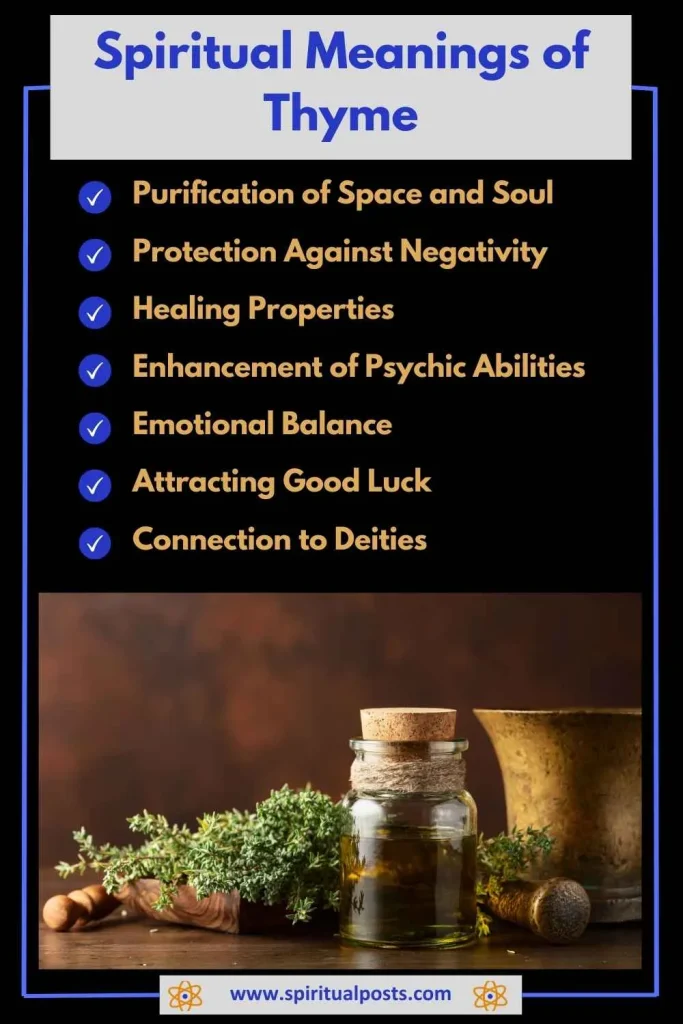
1. Purification
Thyme has been used for a long time as a way to clear bad energy and make spaces feel calm and peaceful. In ancient times, people burned thyme during special ceremonies and rituals to create a sacred and positive atmosphere. This practice was believed to help remove negativity and bring in a sense of harmony.
Many ancient cultures thought thyme had a special purifying power that could protect their homes and gatherings. Burning it wasn’t just about the smell—it was about creating a safe and welcoming space for everyone. The strong, earthy scent of thyme was seen as a way to connect with something deeper and more meaningful.
Even today, people believe thyme has cleansing properties. It is sometimes used in homes to help refresh the energy of a room or to prepare for a new beginning. Its long history as a symbol of purification shows how important this little herb has been in helping people feel safe and at peace.
2. Courage
Thyme has a long connection to bravery and strength. During medieval times, knights carried sprigs of thyme with them before battles. They believed it gave them the courage they needed to face challenges and dangers with confidence.
This herb became a symbol of quiet bravery, reminding people that courage can come in many forms. It doesn’t always have to be loud or flashy—sometimes, it’s about staying strong and steady, even when things are tough. Thyme represents a kind of strength that is calm yet powerful.
Even outside of its historical use, thyme continues to inspire a sense of bravery. People look to it as a reminder that facing difficulties with a steady heart is a true sign of courage. Its gentle yet strong nature reflects how bravery often works in real life: firm and unwavering, even in the smallest ways.
3. Protection
Thyme has been known as a protective herb for centuries, often used to keep people and places safe from harm. In ancient times, people would place thyme in amulets or charms to carry with them, believing it created a shield against negative energies. It was also thought to ward off bad luck and prevent harm from coming to loved ones.
This herb has also played a big role in rituals and traditions. It was commonly burned or placed around homes to protect the space from unwanted influences. Many believed that thyme could clear out bad vibes and create a safer, calmer environment for everyone.
Even today, thyme is still used in some spiritual practices for its protective qualities. Its association with safety and security makes it a favorite herb for those looking to bring a sense of peace and protection into their lives.
4. Healing
Thyme is famous for its healing properties, both physically and spiritually. It has natural antibacterial and antifungal benefits, which is why it has been used in herbal medicine for a long time. People have used thyme to help heal cuts, fight infections, and even soothe coughs.
On a spiritual level, thyme is believed to help with emotional and mental well-being. Its calming vibrations are thought to ease stress and bring a sense of balance and clarity. This makes it a popular choice for people looking to feel more grounded and peaceful.
Many also see thyme as a symbol of recovery and renewal. Whether it’s used in a tea for physical health or in rituals for emotional healing, thyme is celebrated for its ability to bring comfort and strength to those who need it.
5. Enhancement of Psychic Abilities
Thyme has long been connected to boosting intuition and sharpening your sense of awareness. People believe it can help you become more in tune with your surroundings and inner thoughts, making it a helpful tool for anyone exploring meditation or mindfulness practices. It’s often used by those interested in unlocking or strengthening their psychic abilities, like being able to sense things more deeply or clearly.
When used during activities like meditation or divination, thyme is said to create a peaceful and focused atmosphere. Some people burn thyme as incense or keep it nearby to help them feel calm and connected during these practices. This makes it a valuable herb for anyone wanting to explore their spiritual side or develop skills like clairvoyance (the ability to sense things beyond the ordinary).
Thyme’s ability to enhance awareness isn’t just about psychic abilities—it can also make you feel more present and focused in your daily life. Whether you’re learning about meditation or simply want to feel clearer and more connected, thyme is often seen as a supportive herb for helping with those goals.
6. Heroism
In ancient cultures, thyme was a symbol of bravery and strength. Warriors would often carry thyme into battle or use it before challenges to feel more confident and courageous. It was believed that thyme could inspire them to face obstacles with a fearless attitude, making it a powerful symbol of heroism.
This association wasn’t limited to battlefields. Thyme was also connected to acts of personal strength, like standing up for what’s right or pushing through difficult times. People believed that the herb carried an energy that could make a person feel bold and determined when they needed it most.
Even today, thyme is seen as a reminder of inner strength and resilience. Whether it’s through its historical ties or its calming aroma, thyme continues to inspire feelings of courage and power during moments when bravery is needed.
7. Dream Work
Thyme has long been associated with improving dream recall and even encouraging prophetic dreams. People believe that placing thyme under your pillow can help you remember your dreams more clearly and may even reveal messages or insights through those dreams. This connection to dreams makes thyme an important herb in spiritual practices.
Many spiritual practitioners use thyme during bedtime rituals to enhance their nighttime experiences. They believe it can act as a gateway to deeper, more meaningful dreams. Whether for gaining clarity, exploring personal emotions, or seeking guidance, thyme is considered a helpful tool for those who want to better understand their dreams.
Thyme’s role in dreams also ties into a larger tradition of plants being used in rituals. It shows how nature can be connected to the mysteries of sleep and the subconscious mind. This practice of placing herbs under pillows has existed for centuries in many cultures.
8. Emotional Balance
The aroma of thyme is believed to have a calming and uplifting effect on emotions. Its scent is said to help reduce anxiety, fear, or sadness, making it a popular choice for emotional healing. People often use thyme in oils, teas, or incense to create a sense of peace and balance.
Spiritually, thyme is thought to promote emotional clarity by grounding your thoughts. When emotions feel overwhelming, thyme’s essence is believed to help you sort through those feelings and find calmness. This makes it valuable for those going through stressful or challenging times.
By supporting emotional balance, thyme can help you feel more in control. Its effects are subtle yet powerful, reminding us that small tools, like an herb, can make a meaningful difference in how we feel.
9. Attracting Good Luck
Thyme is often used in traditions and rituals to attract good fortune. People believe it can bring positive energy, success, and even well-being into their lives. For this reason, thyme is a common ingredient in spells or charms designed to invite luck.
This belief in thyme’s ability to attract good luck stems from its long history in folklore. Many cultures viewed thyme as a magical herb that could create opportunities and remove obstacles. Its reputation makes it valuable for those seeking a little extra help on their journey.
Whether carried as a talisman or used in rituals, thyme holds strong symbolic meaning. It represents the hope that something good is right around the corner, giving people a sense of optimism and encouragement.
10. Connection to Deities
Thyme has ties to powerful mythological figures like Ares and Mars, who are associated with strength, courage, and war. These connections highlight thyme’s symbolic role as an herb of bravery. In ancient times, warriors would use thyme to gain confidence and protection before going into battle.
The herb’s link to such deities also emphasizes its spiritual significance. It is seen as a way to connect with higher realms and channel inner strength. Rituals involving thyme often focus on summoning courage or paying tribute to these ancient figures.
By associating thyme with bravery and strength, people have used it to inspire themselves during difficult moments. It serves as a reminder of resilience and the power to overcome challenges, both physically and emotionally.
Thyme’s Magical Properties and Benefits in Spirituality
Thyme is rich in magical properties that cater to both spiritual practices and everyday life. Here’s how thyme’s energetics align with various spiritual dimensions:
- Elemental Associations: Thyme connects with both water and fire, symbolizing cleansing and transformation.
- Astrological Ties: Linked to Aries and Pisces, thyme balances fiery courage with emotional intuition.
- Chakras: It resonates with the solar plexus and heart chakras, promoting both willpower and emotional healing.
- Feminine Energy: Thyme is associated with receptive, nurturing qualities.
Its magical versatility makes it a staple in rituals for purification, protection, and enhancing divine connections. Whether burned, brewed in tea, or infused into oils, thyme integrates seamlessly into holistic and spiritual practices.
What Does Thyme Symbolize in the Bible?
Throughout the Bible, herbs are often symbolic tools used to convey spiritual messages of purification, healing, and protection. While thyme is not directly mentioned in the Bible, its properties align with many biblical teachings. Herbs like hyssop, mentioned in verses like Psalm 51:7 (“Cleanse me with hyssop, and I shall be clean”), share similar purifying attributes.
Thyme’s historical role in cleansing rituals resonates strongly with biblical practices of sanctification and purification. Its use in religious ceremonies mirrors the themes of spiritual renewal and divine connection common in biblical texts.
Spiritual Benefits of Burning Thyme and Placing It Beneath Your Pillow
Burning Thyme
Burning thyme is a simple yet powerful way to harness its cleansing and purifying energies. The smoke is believed to clear negative vibrations, create a sacred ambiance, and attract positive energy. Here’s how you can use it:
- Light a dried thyme bundle.
- Allow the smoke to waft around your space, focusing on areas where negative energy might linger.
- Use it during meditations or rituals for added spiritual depth.
Thyme Under Your Pillow
Placing thyme beneath your pillow can promote restful sleep, vivid dreams, and spiritual insight. This practice is often used for dream work, including prophetic dreaming:
- Wrap dried thyme in a small cloth or sachet.
- Tuck it under your pillow before sleeping.
- Reflect on and record any dreams to uncover hidden messages or guidance.
Unlock the Magic of Thyme in Your Life
Thyme is much more than a fragrant herb—it’s a symbolic powerhouse of purification, courage, protection, and healing. By incorporating it into your spiritual practices, you open the door to emotional clarity, enhanced intuition, and divine connections.
Whether you’re burning it to cleanse your space, using it to improve your dream work, or simply appreciating its history of heroism, thyme offers endless spiritual value.
Now’s the time to reconnect with nature’s mystical offerings. Add thyme to your routine and experience its transformational power firsthand!
You Might Also Like
1) 10 Spiritual Meanings of Rosemary, Its Symbolism & Benefits
2) 10 Spiritual Meanings of Snake Plant, Benefits & Disadvantages
3) List of Spiritual Smells and Their Meanings (Prophetic!)
4) 4 Spiritual Meanings of Rotten Egg Smell in The House
FAQs
1. What are the magical properties of thyme?
Thyme is associated with courage, purification, healing, and psychic development. In magical traditions, it is used to cleanse spaces of negative energy. Burning dried thyme as incense is believed to clear a room of heaviness and invite in positive spirits. Thyme is also carried or worn for courage, especially before difficult conversations or challenges. Some traditions use thyme in sleep pillows to ward off nightmares and promote restful sleep. It is also associated with fairy magic, believed to attract helpful nature spirits when grown near a home.
2. How can I use thyme in my spiritual practice?
There are many simple ways to work with thyme. You can burn dried thyme leaves as incense to cleanse your space before meditation or prayer. You can place fresh thyme on your altar as an offering or as a symbol of courage. You can add thyme to a bath for purification and emotional healing. You can also carry a small bundle of dried thyme in a pouch when you need extra bravery. Even cooking with thyme can be a spiritual act. As you add it to food, set an intention for courage, healing, or protection for those who will eat.
3. What does thyme symbolize in the Bible?
While thyme is not mentioned directly by name in most Bible translations, many scholars believe it was one of the herbs used in biblical times for purification and anointing. Some connect thyme to the “hyssop” mentioned in the Old Testament, which was used for cleansing rituals. In Christian folk tradition, thyme is associated with the Virgin Mary. It was said to have grown on the path to Bethlehem, and its fragrance is believed to carry comfort and peace. Thyme’s symbolism of courage also connects to biblical themes of facing trials with faith.


